Luminance
Helping young adults build healthier financial habits without giving up the present
Role
User Researcher, UX Designer, 3D Designer, Motion Designer
Duration
6 Months
Team
Thayna Santana, Larry Tian, Veneza Yuzon

Overview
Meet Yolanda, a young adult trying to build healthier financial habits. She wants a stable future, but not at the cost of the present — she still wants to buy things that make her happy.
Luminance helps young adults picture their financial future and stay motivated to save for it. Instead of just tracking spending and transactions, it pushes users to actually reflect on how their choices affect where they're headed, without giving up their quality of life today.
Users track their progress, hit milestones, and adjust course as needed. The goal was to make saving feel less like a chore and more like something you're actively working toward.
Tools: After Effects, Blender, Figma, Photoshop, and Protopie.
Meet Yolanda, our persona for this project
Key Interactions
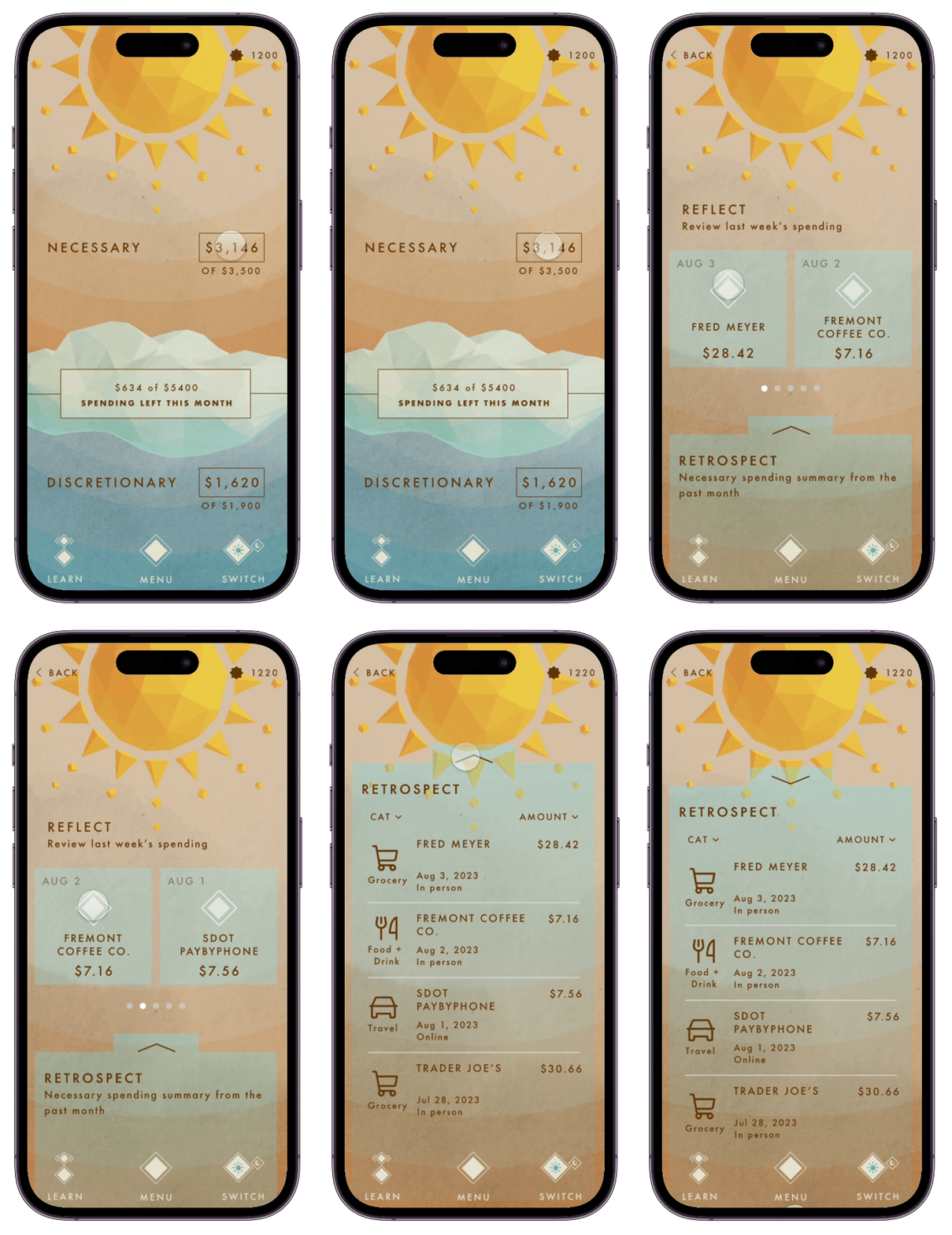
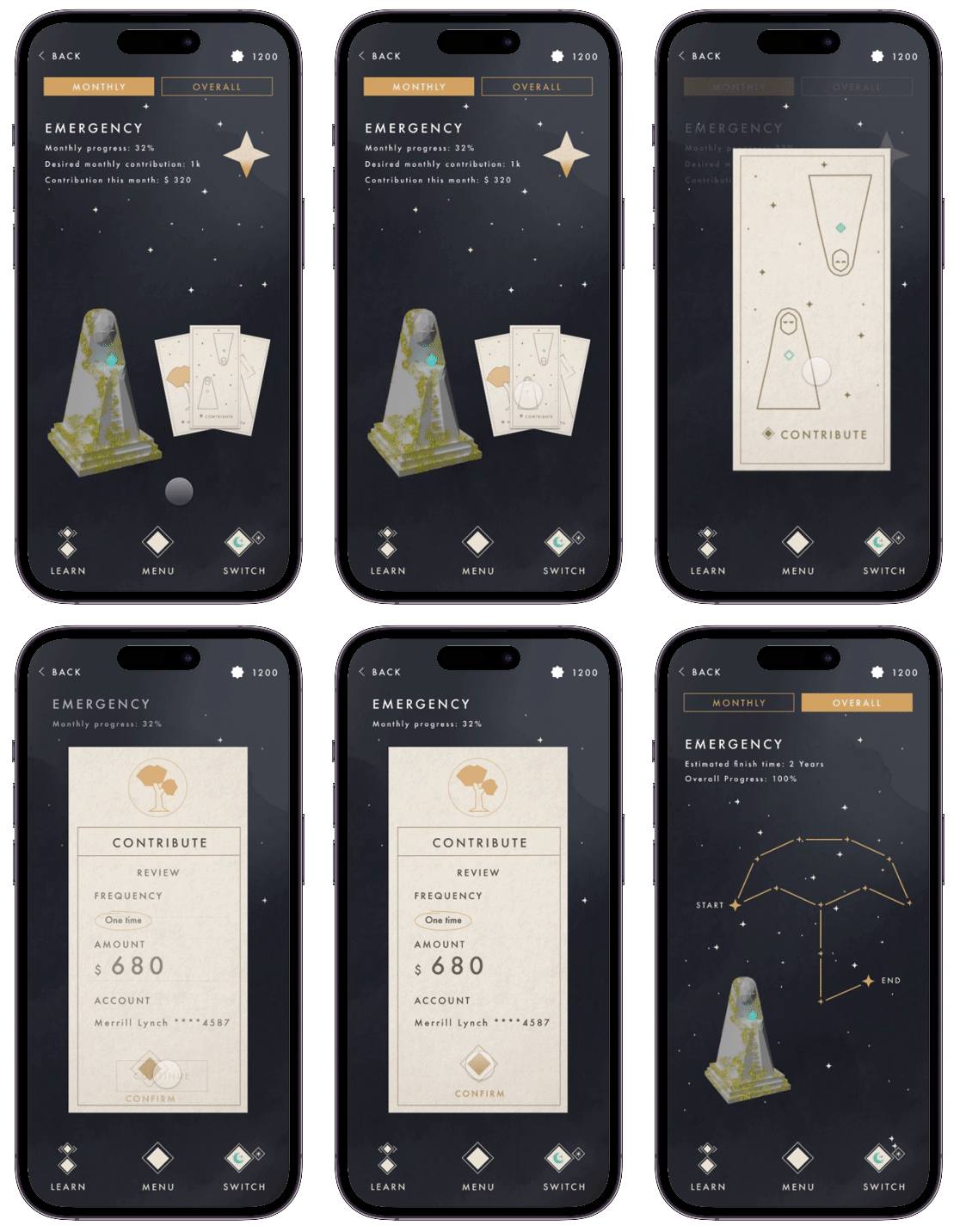

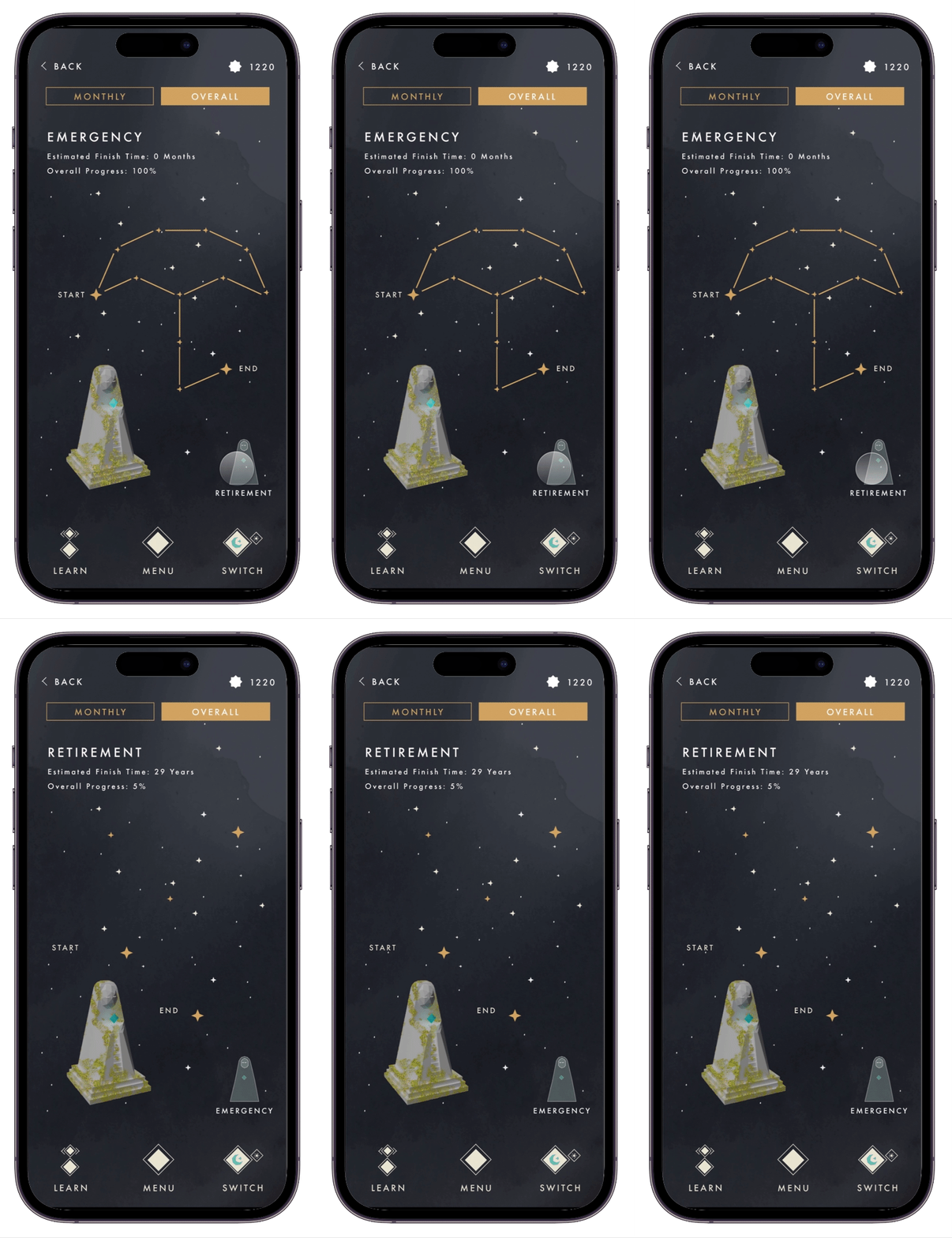
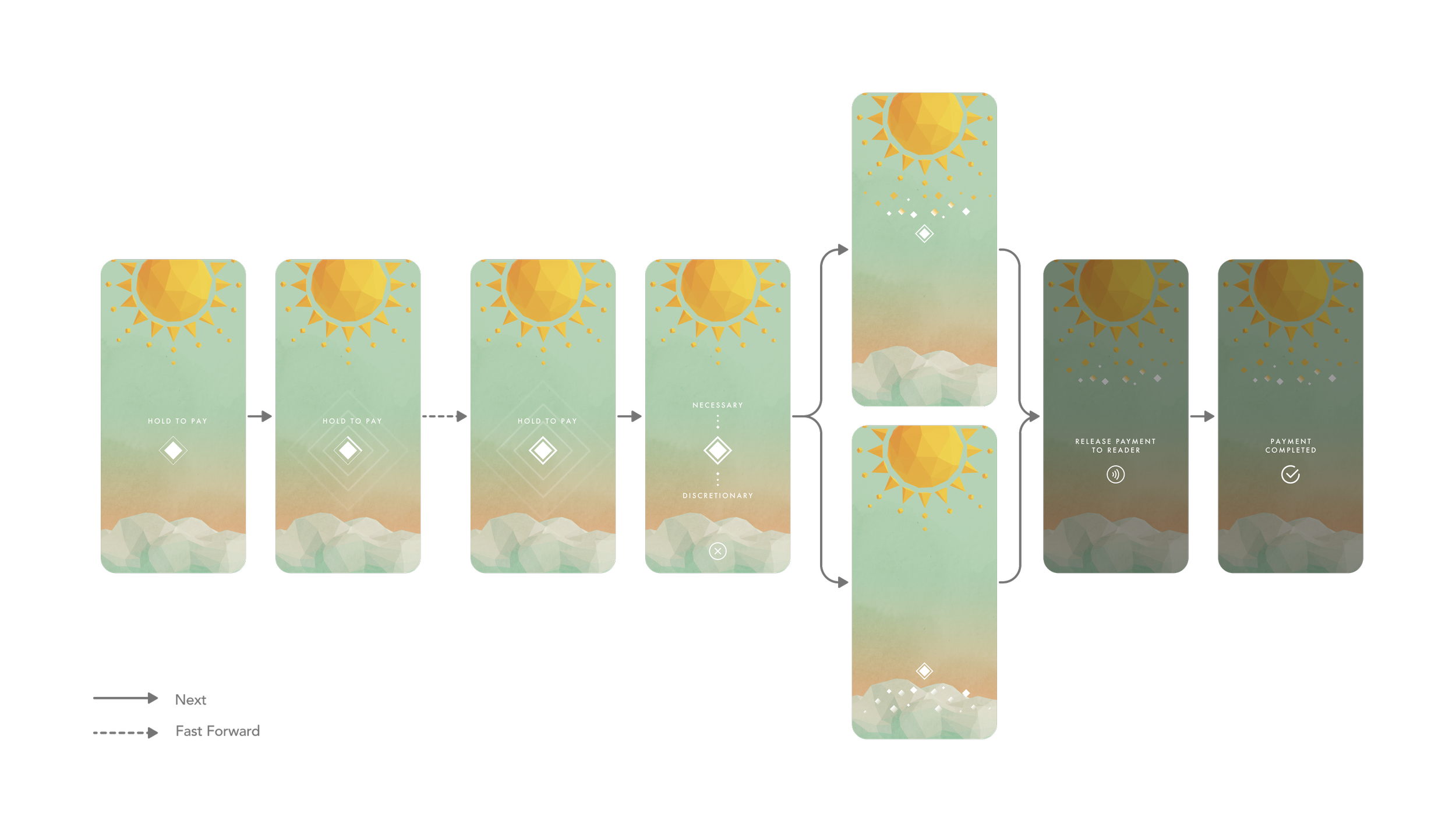
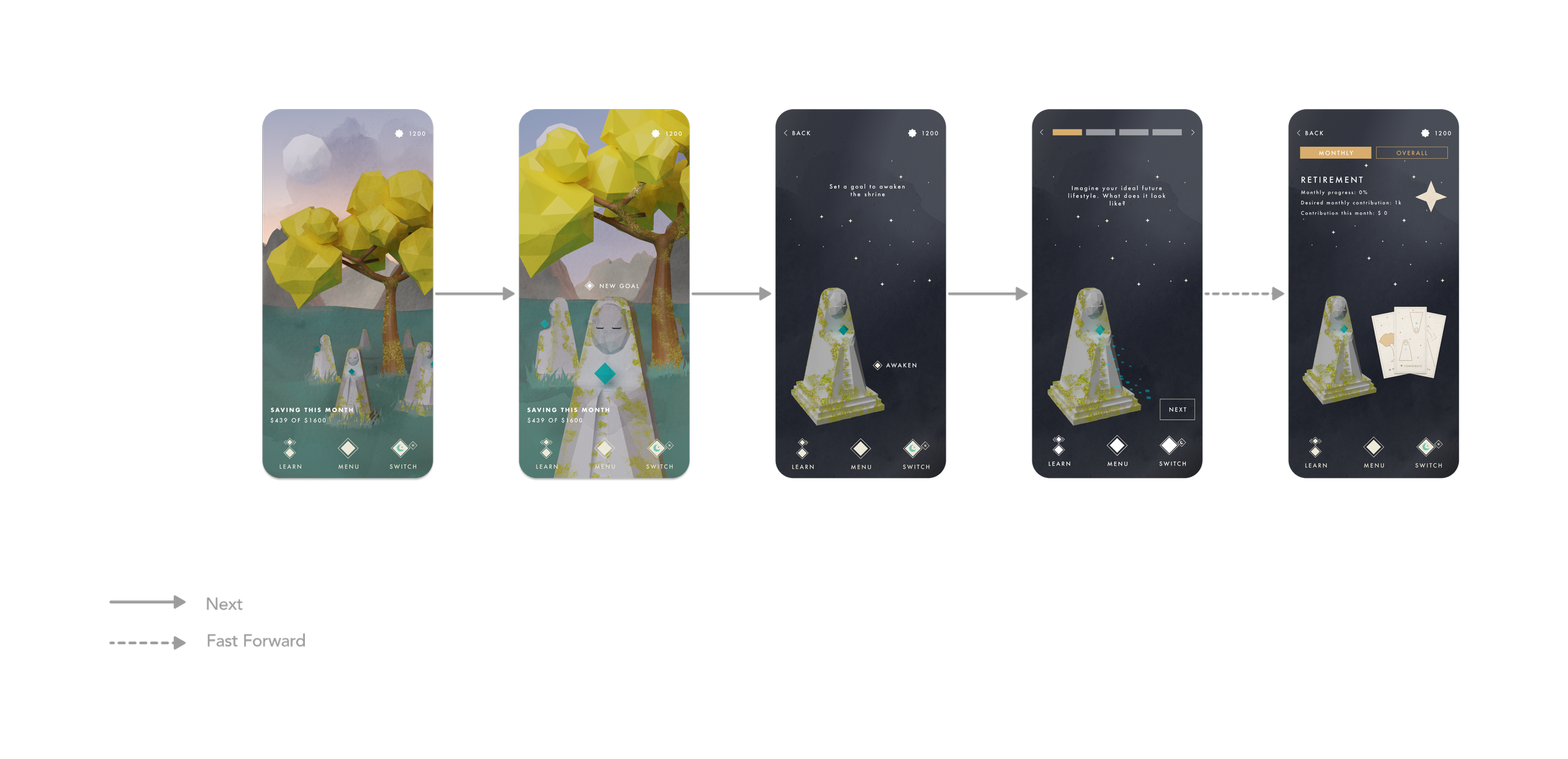
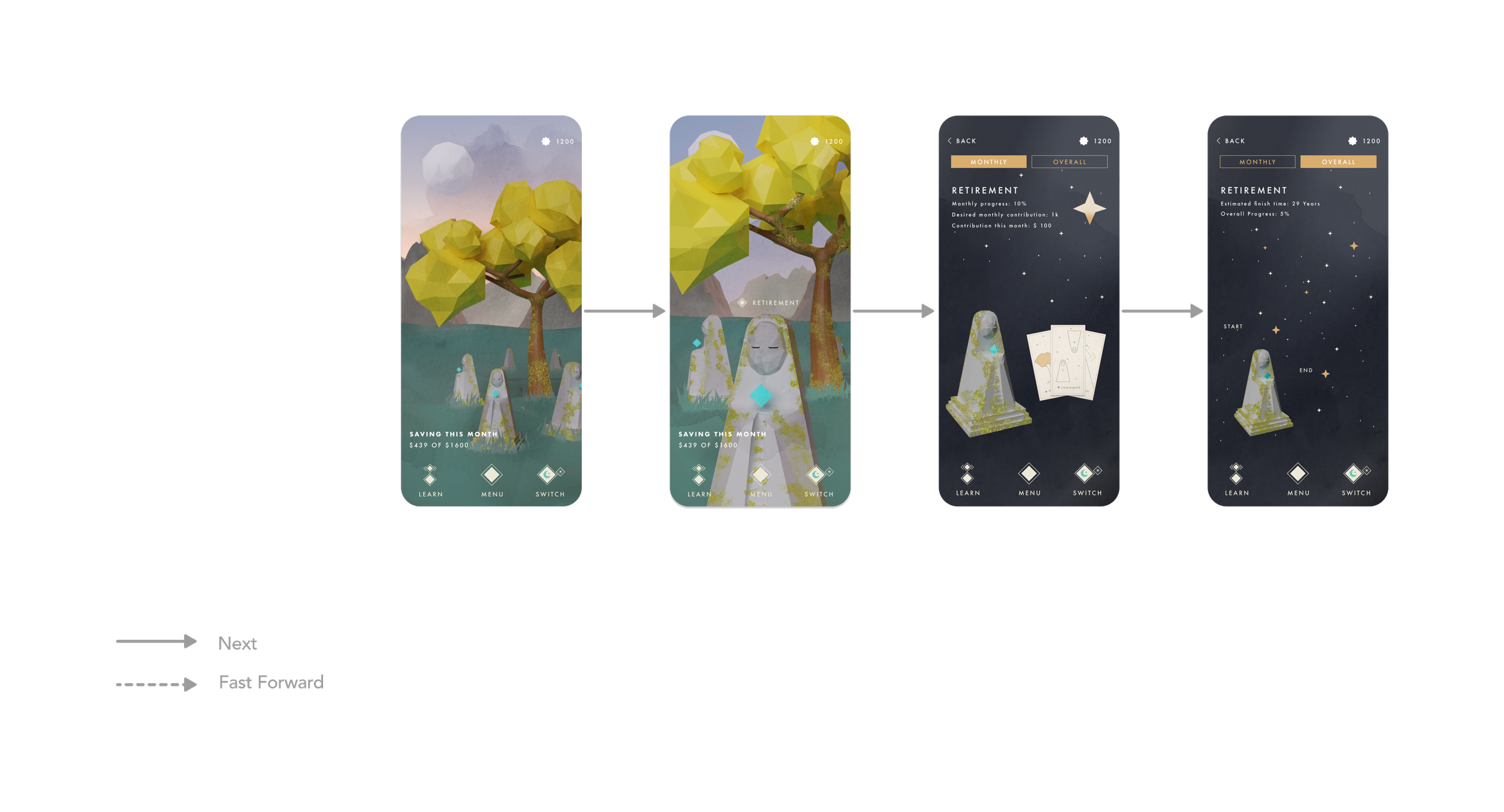
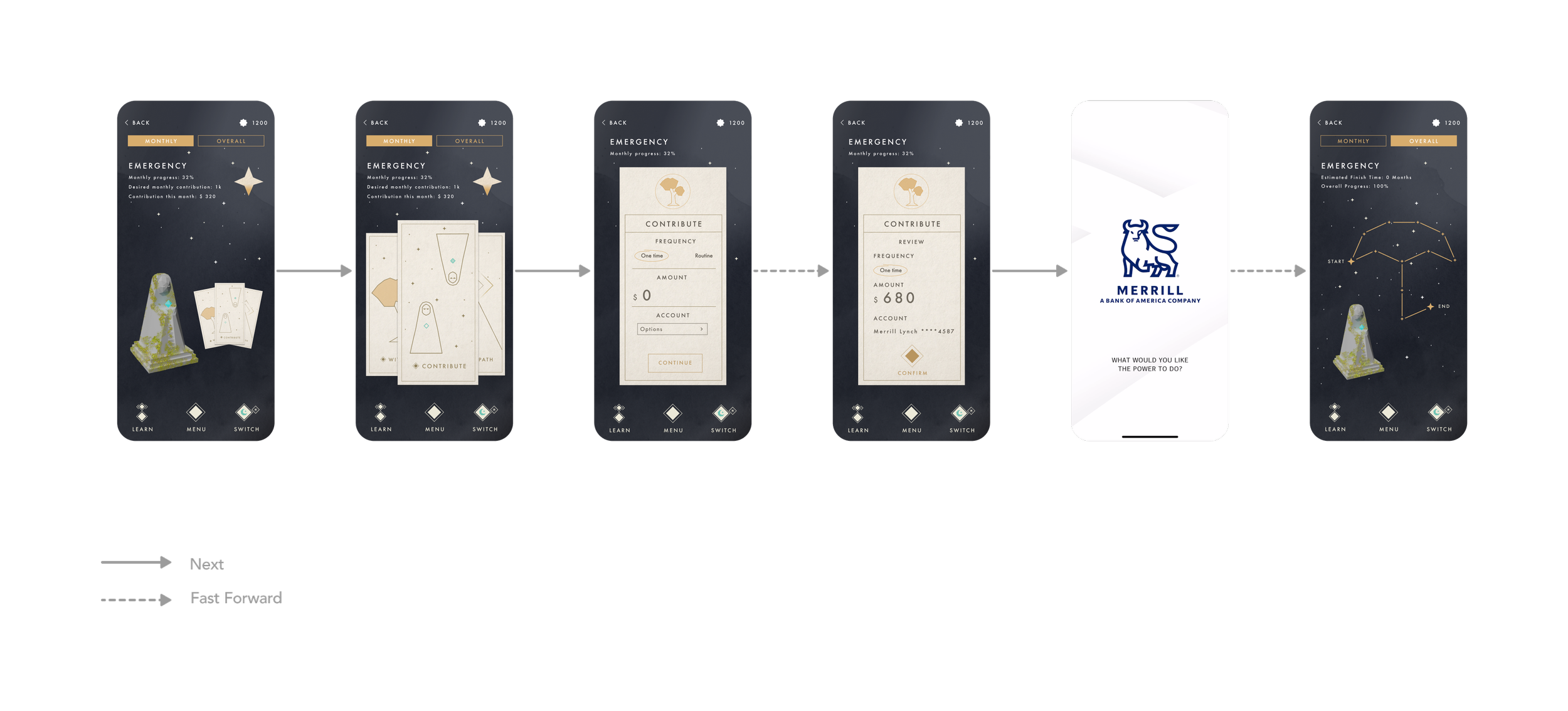
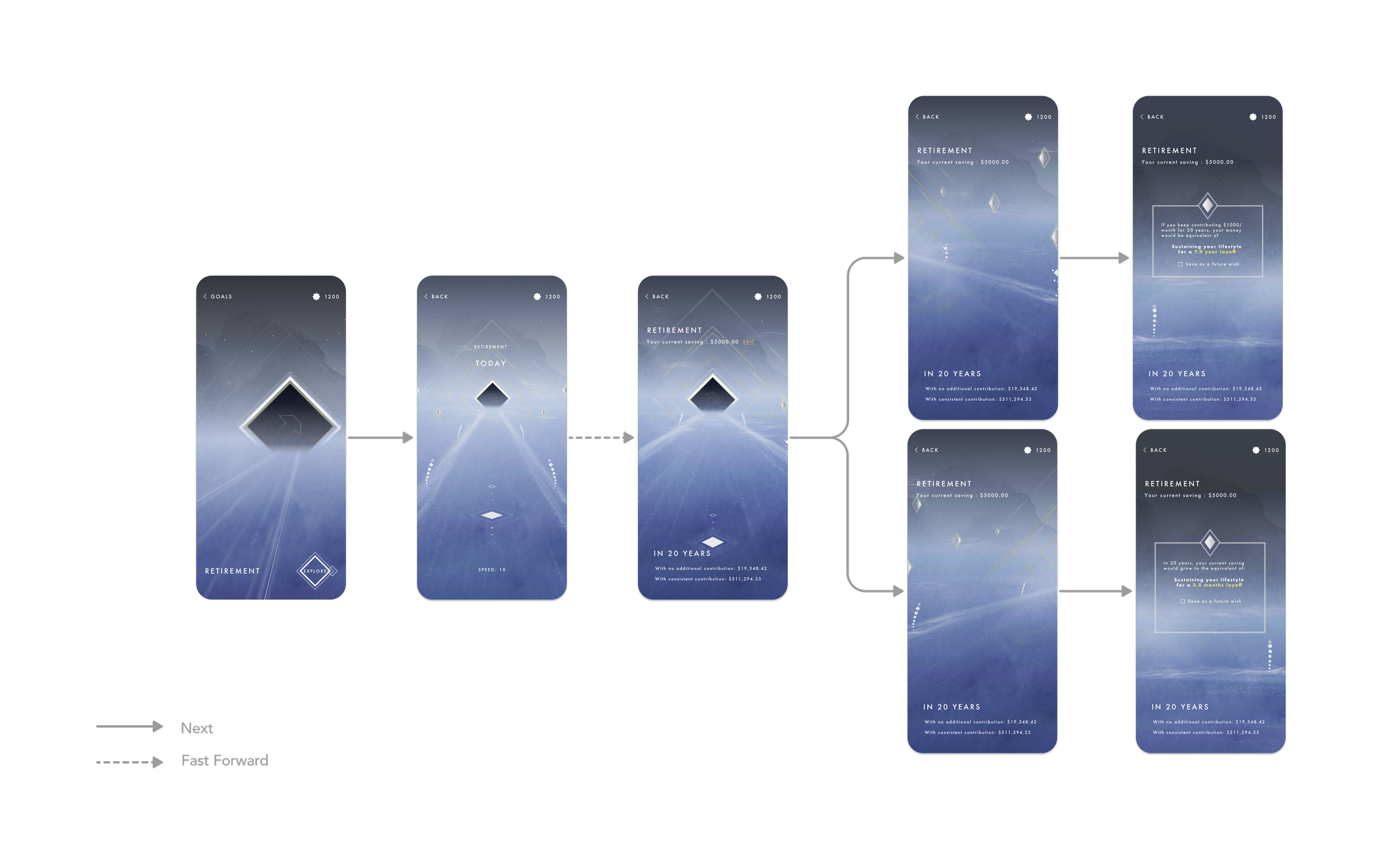
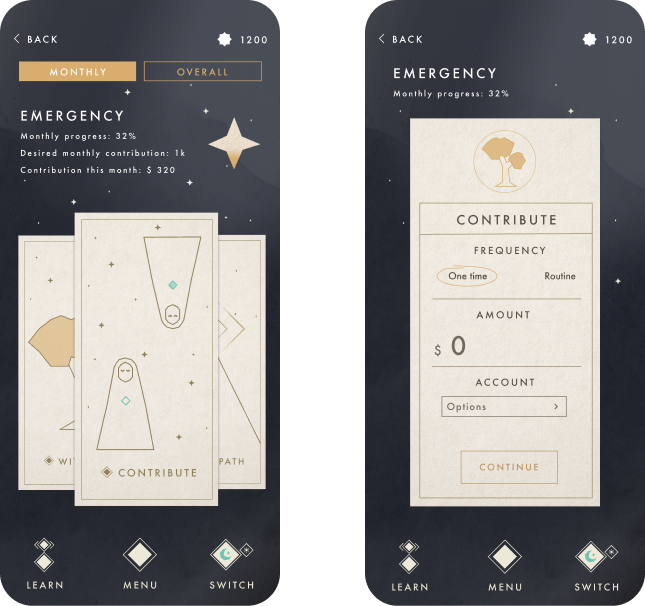
Future Planning simplifies future planning for young adults, emphasizing the importance of goal setting and contribution to their plans without sacrificing the present, and lets them track progress using user-drawn icons representing their goals.
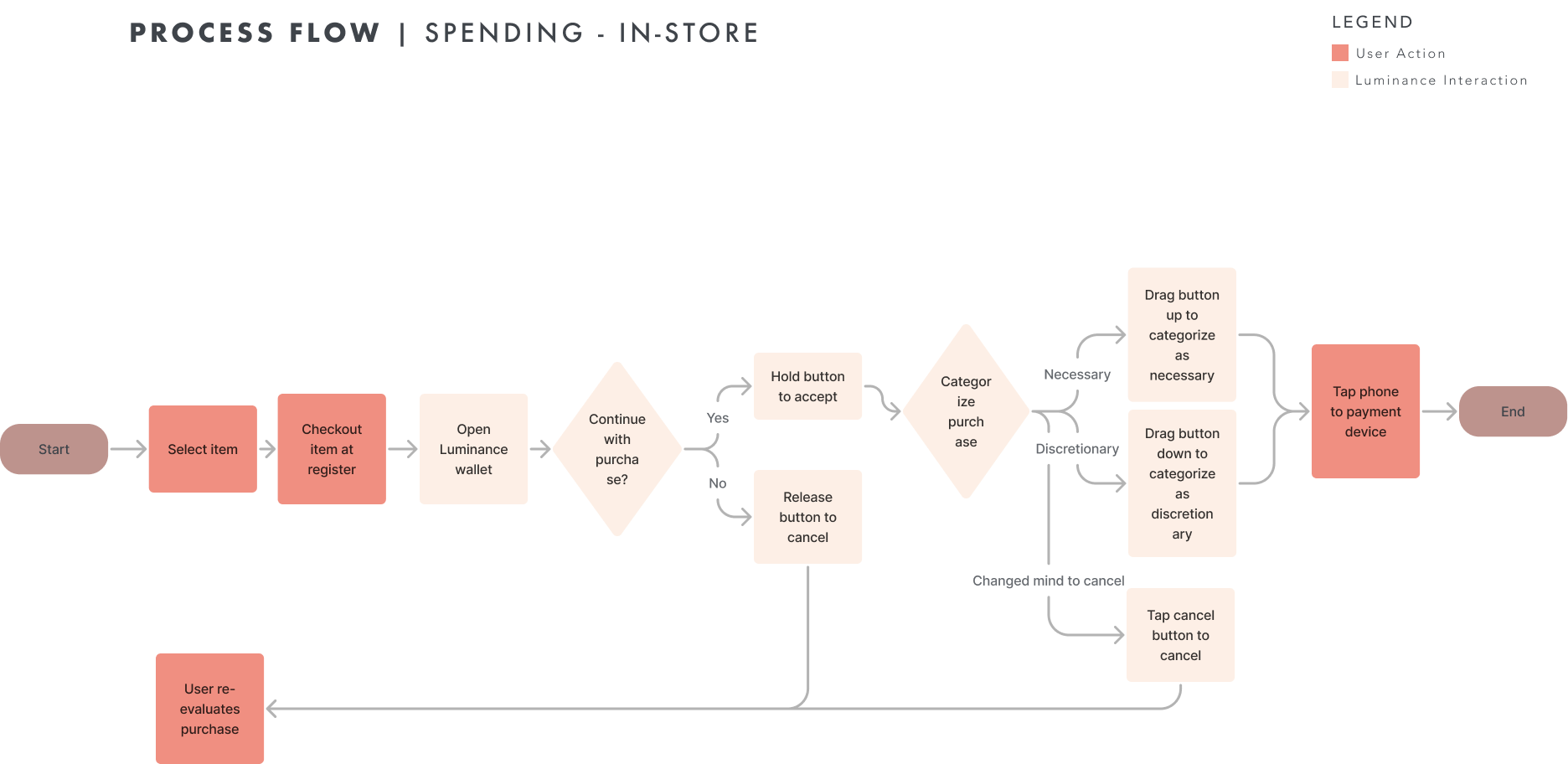
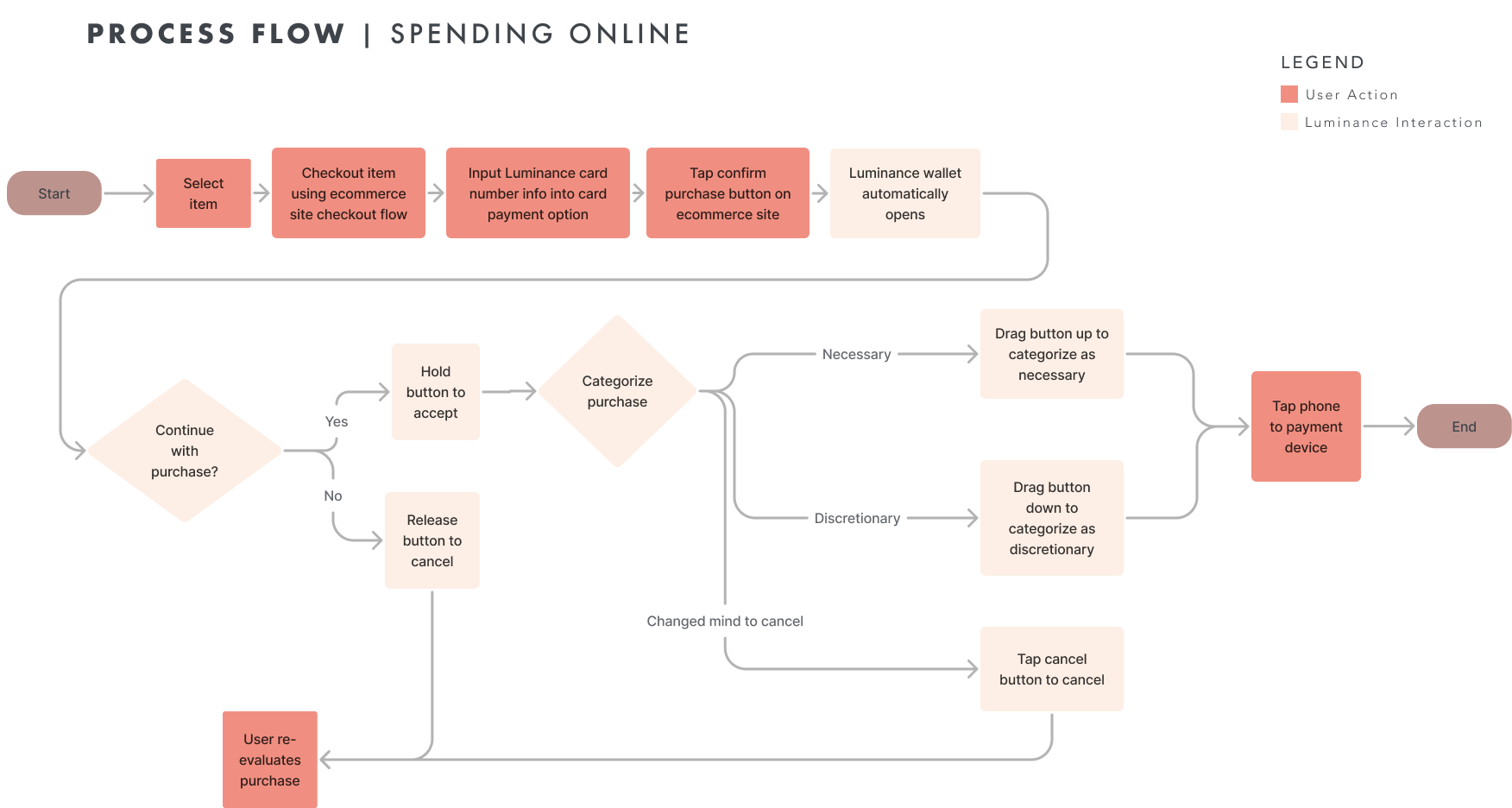
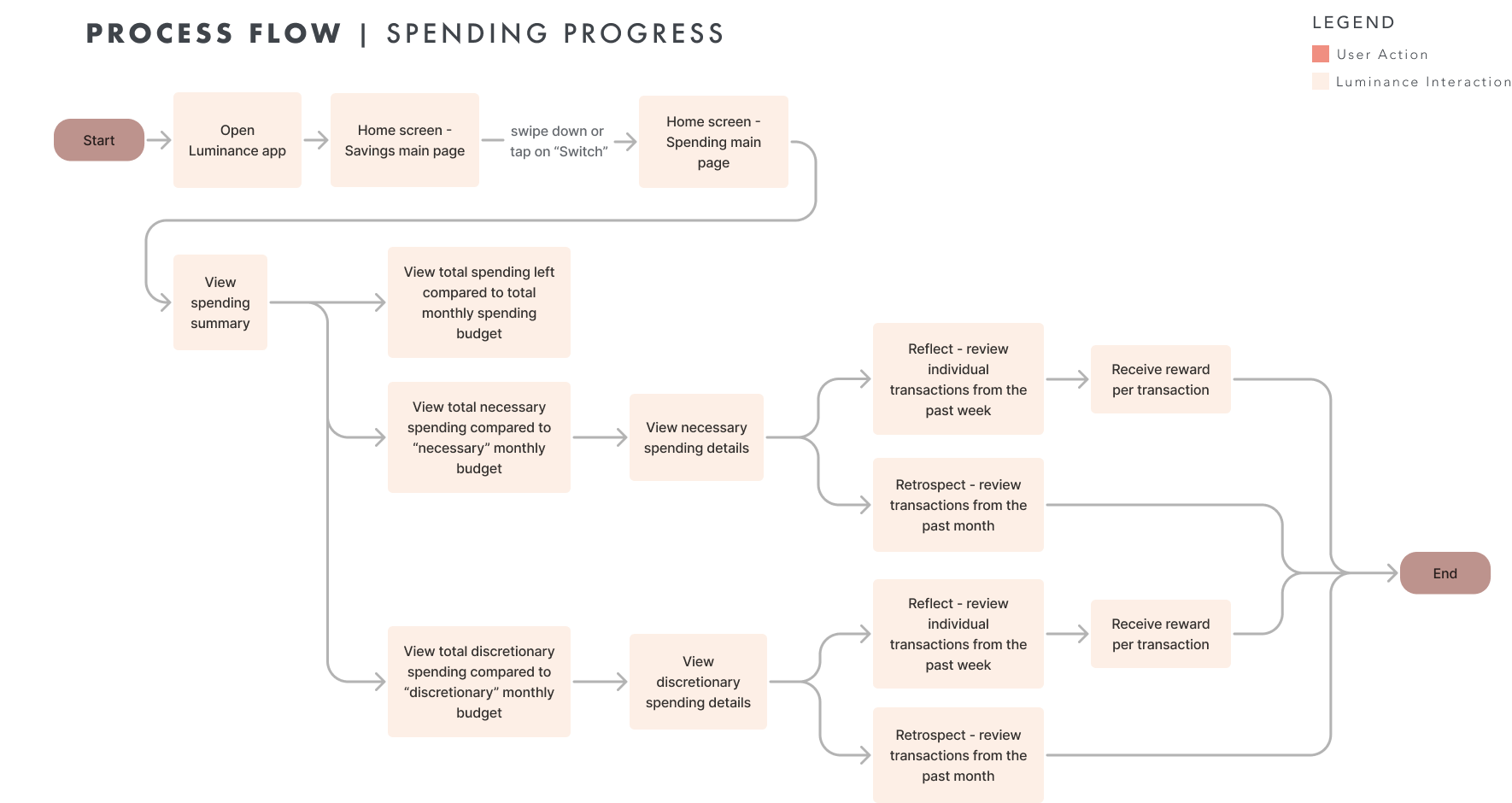
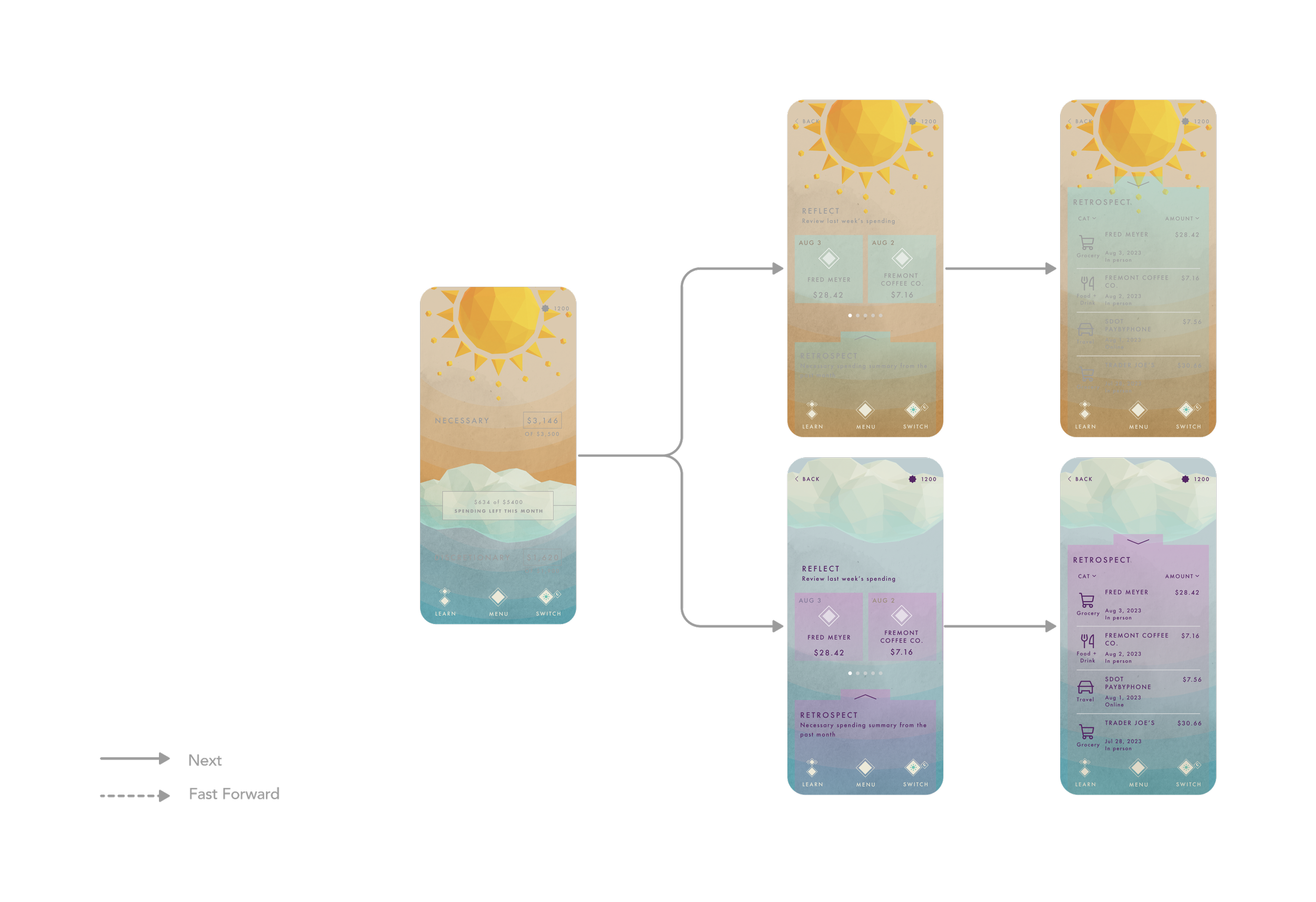
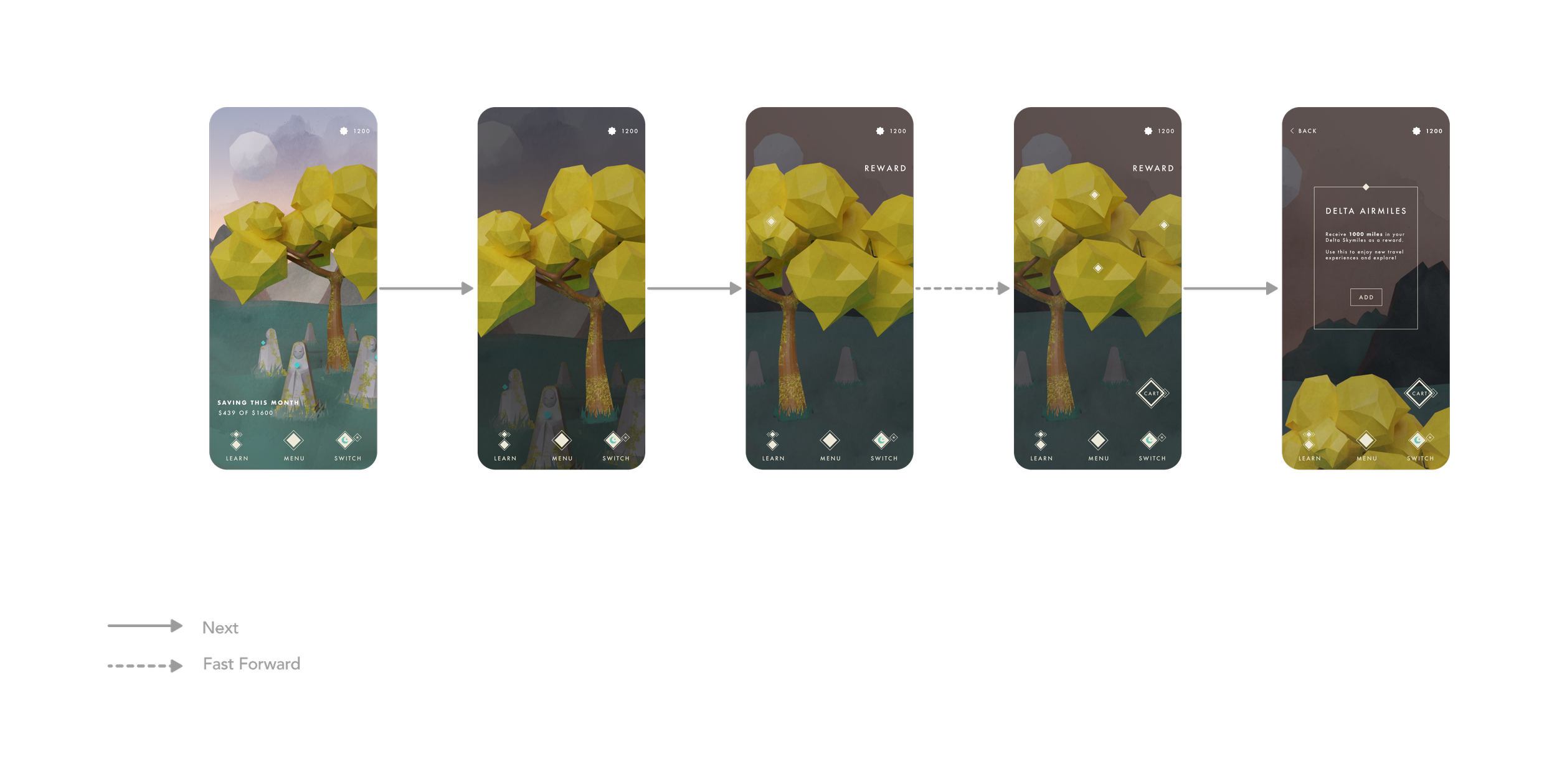
Mindful Spending prompts young adults to think about their expenses before and after a purchase, building real awareness of where their money goes.
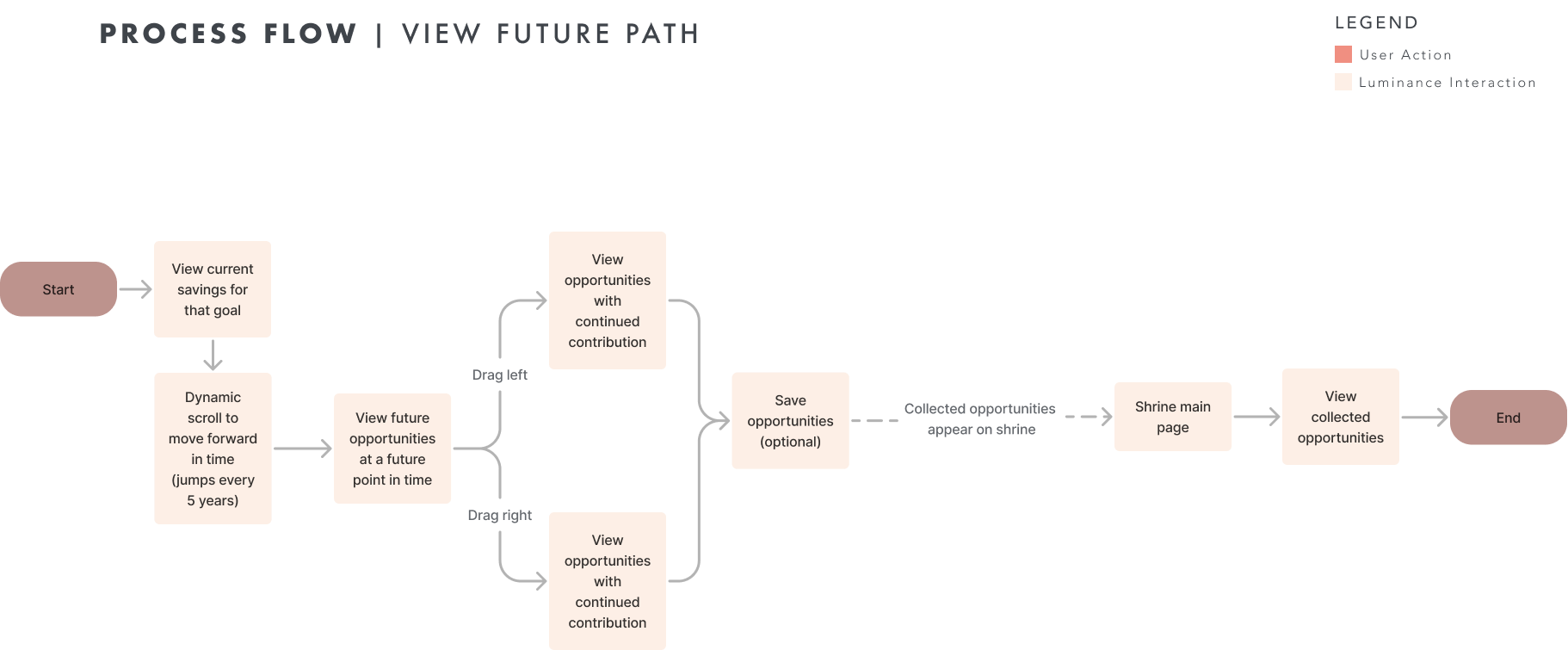
The "Future Path" feature lets young adults visualize savings growth and explore different saving opportunities represented as stars, making future planning personalized and enjoyable.
Situation
27% of American households reach retirement age with minimal or no savings, necessitating continued employment to cover their living expenses, including the escalating costs of healthcare.
The financial future of many young adults, particularly those aged under 29, often takes a back seat in their priorities. In fact, an alarming 66.2%, mainly among Millennials, found themselves without any retirement savings during this period. This shortfall in savings can be attributed, in part, to the allure of materialism and the desire for immediate gratification, which frequently lead to impulsive financial choices.
Many young adults view retirement as a distant, abstract concept, further postponing any preparations. A lack of financial knowledge and understanding of retirement options compounds the issue. Early exposure to financial education has the potential to significantly reshape the financial behaviors and overall well-being of young adults, alleviating stress in matters such as budgeting, bill payment, borrowing, and investing.

Framing the retirement savings gap among young adults
Research
In our study, we confirmed that young adults lack the motivation to save for retirement due to uncertainty about the future. Stable income is crucial before they consider saving. Our research showed that young adults prioritize experiences and joy in their spending and saving choices, which affects how they view retirement planning.
We conducted a comprehensive research effort, interviewing 10 young adults. Five participated in a probe activity, providing valuable insights into their real-time financial behaviors, while the remaining five engaged in semi-structured interviews, allowing us to gain a deeper understanding of their perceptions and habits related to savings and retirement.
We also interviewed five Financial Advisors as subject matter experts. Their input gave us a professional perspective that shaped how we thought about the problem.
Methods
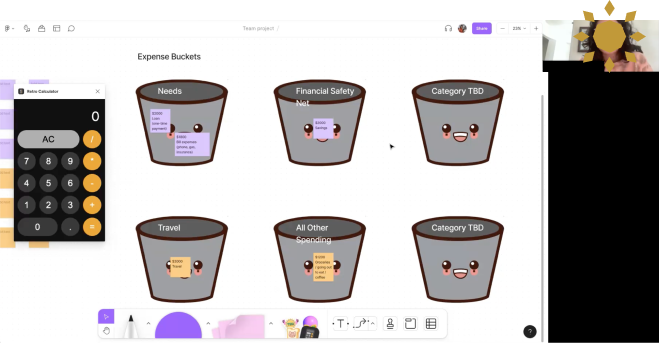
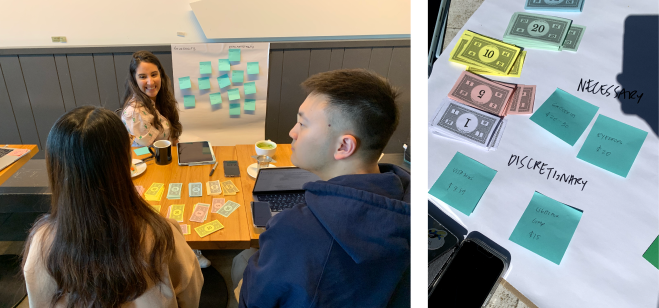
Participant Profile
Young Adult (ages 18-29): nearly half of all adults are financially independent by age 29. We recruited financially independent people earning at least the median income for their city, across a mix of genders and locations. Interviews were remote, while probe participants were Seattle-based for logistics. Full-time students were excluded, since they're less likely to be financially self-sustaining.
Financial Advisor: no specific criteria. We just wanted a professional's perspective on the problem space.


Findings
Without a clear picture of their goals, young adults don't see the point of saving. One participant put it plainly: "I don't have like a really concrete sense of my goals and my desires... I am putting money because I know I have to."
Once they do have a goal, reflection is how they keep themselves on track. "Because saving is ultimately a form of self-care, you're protecting your future."
Joy motivates saving more than obligation does. Games came up a lot in these conversations, and some participants said they'd learned about finances through gaming. "Now you showed me the compound interest thing, maybe I'll cut some joy."
Past and future experiences shape how young adults justify their spending: "Prioritizing spending money on the things that matter most to you."
Even with real uncertainty about retirement, they still want a safety net for the near term. "I personally don't see the point of a 401k because it's not even a guarantee."
And most of them picture a future where they get to spend more time on what they actually love. "The concept of passive income, or owning your own business..."

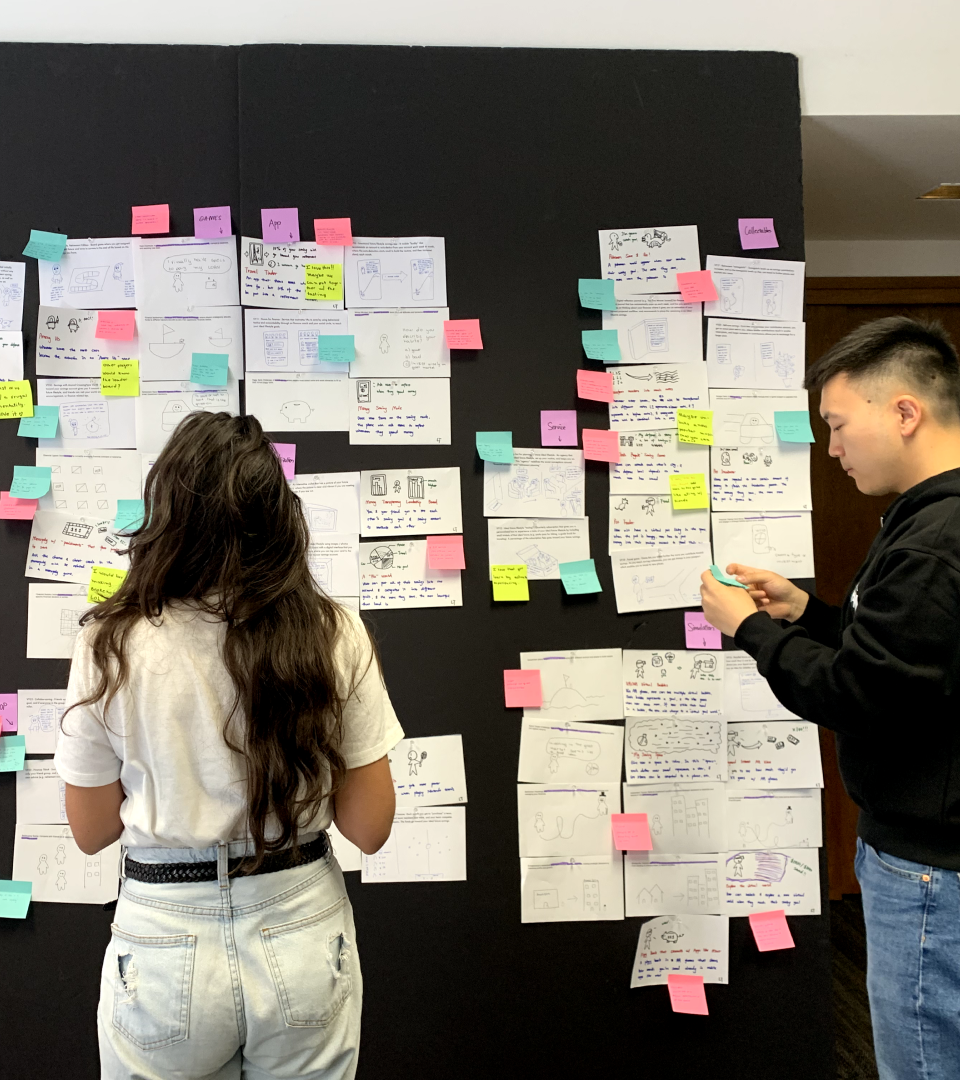
Synthesizing interview and probe findings
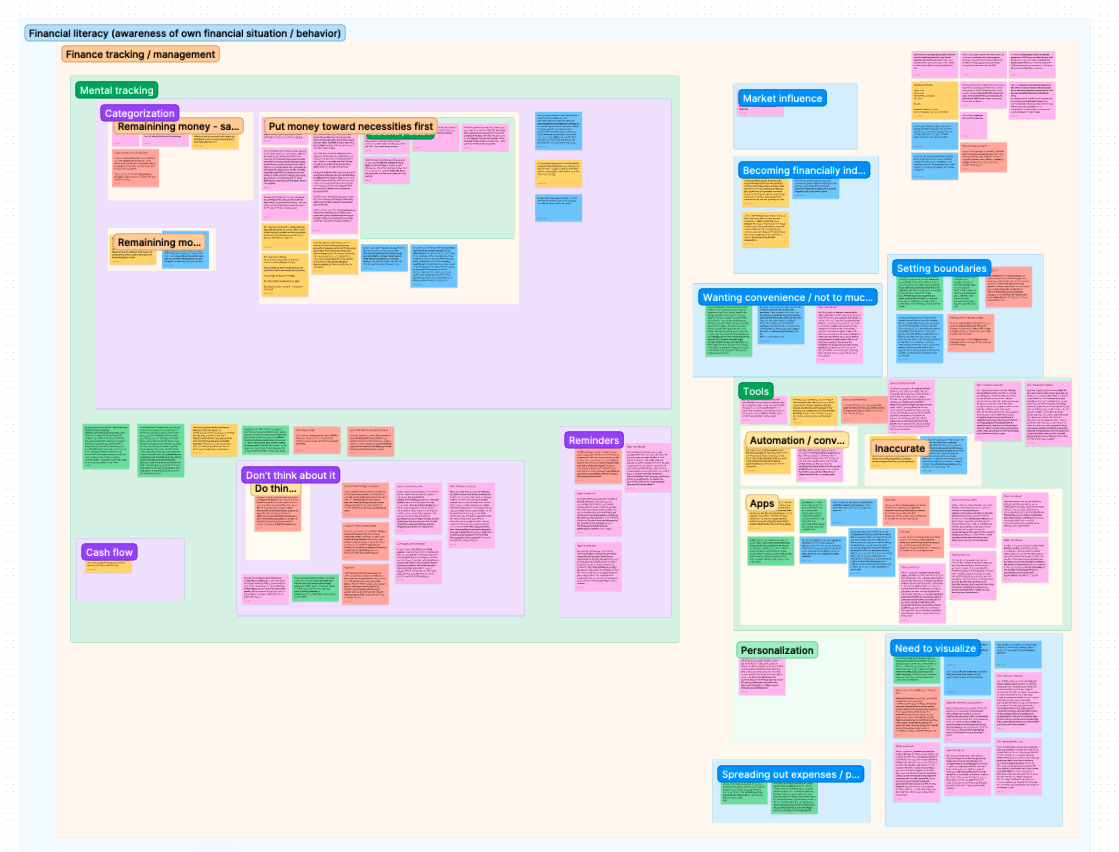
Affinity mapping research findings
Objective
Increase financial literacy and awareness among young adults, helping them understand the importance of financial planning and retirement savings.
Encourage young adults to adopt more mindful spending habits by making them aware of the consequences of their financial choices.
Create an engaging and user-friendly experience that makes financial planning and saving an enjoyable and personalized journey for young adults.
Design Principles
Engaging — interesting and engaging so users are willing to use it. Reflective — help users reflect in order to learn. Sense of Security — give people confidence to both take risks and protect their future. Personalized — make information specific to the user's situation and needs. Balanced — inform without overwhelming, using a step-by-step approach that lets people enjoy their youth while proactively saving for the future.
Ideation
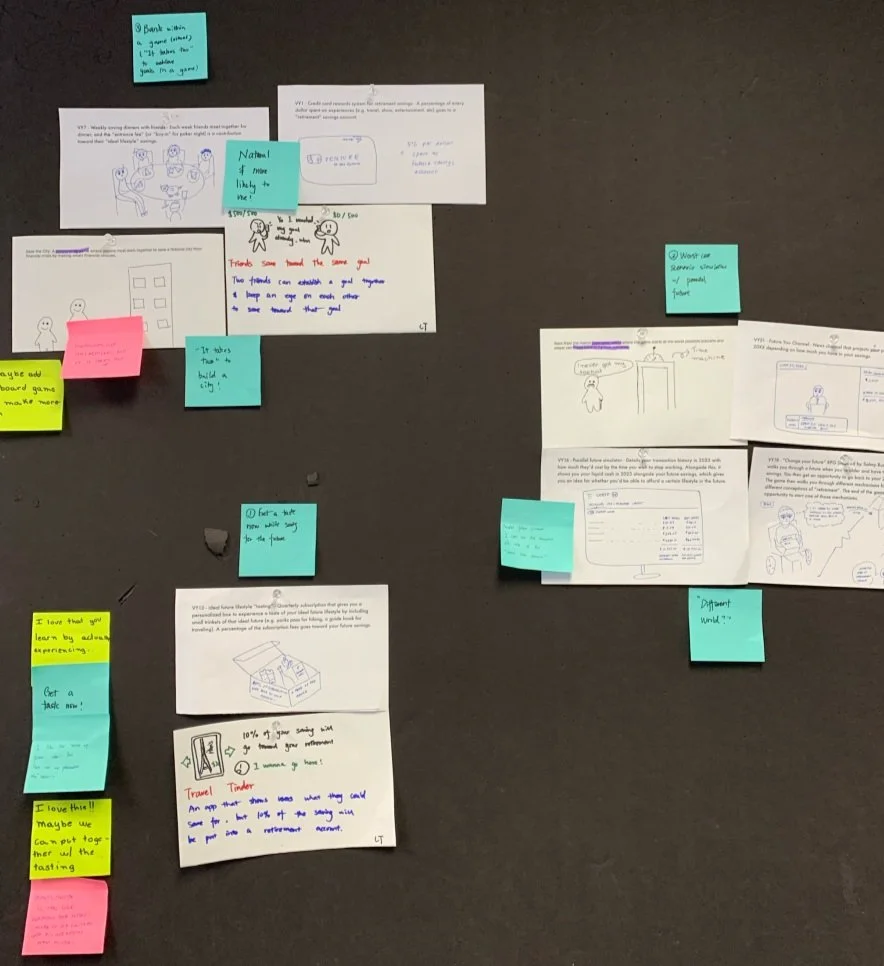
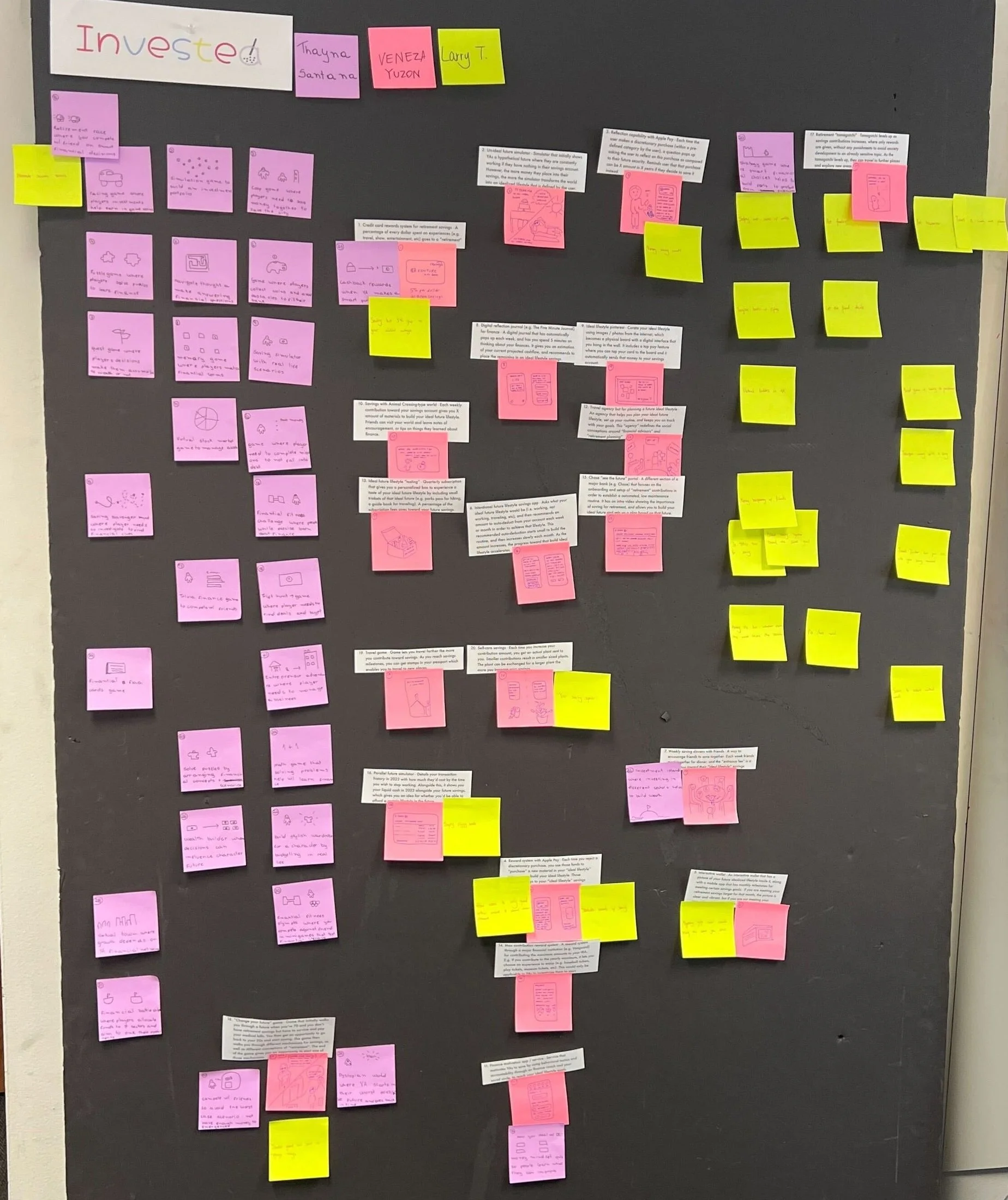
As a team, we brainstormed a total of 79 ideas spanning themes like visualizing worst-case scenarios, gamification, rewards, rethinking banking, connecting finance with fitness, collectibles, and simulations.
We used our design principles and desired outcomes as the filter, then dot-voted to gauge enthusiasm for each concept. Ideas that didn't hold up against our research got cut, and we grouped what was left into categories to weigh their strengths and weaknesses against each other.
Initial Storyboard
Our team embarked on a mission to ensure everyone had a shared understanding of the product and its vital functionalities, prioritizing an engaging, gamified experience while temporarily setting aside the financial aspects.
After stakeholder feedback, we realized that gamifying without a clear purpose didn't serve our goals. We went back to ideation to find approaches that actually added value instead of just being fun for its own sake.
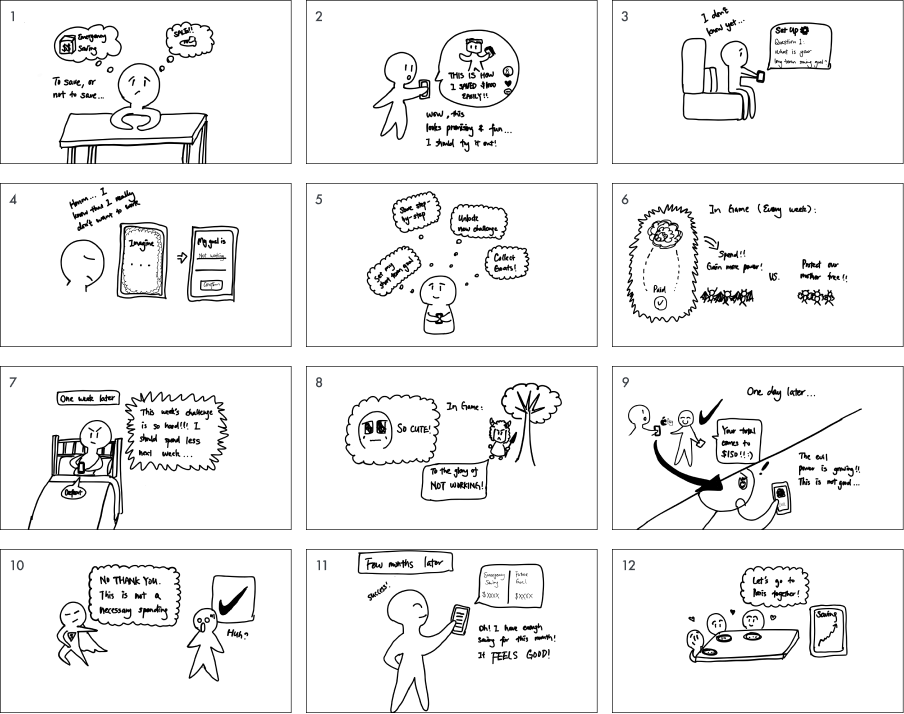
Initial storyboard exploring a gamified experience
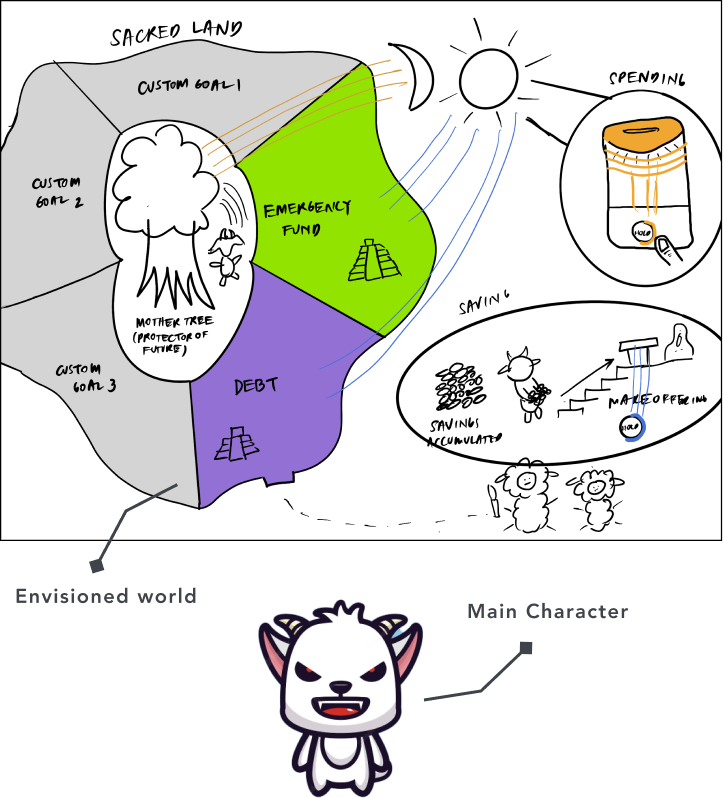
Refined Storyboard
The second version of the storyboard tested well, but we refined it further by varying the main character's surroundings. Instead of keeping her seated the whole time, we set scenes in different locations to make the story more relatable.
That refined storyboard became our blueprint, tying gamification elements to actual financial management features. When feedback said the main character came across as too sedentary, we revised it again to show a more active lifestyle.


User Flow
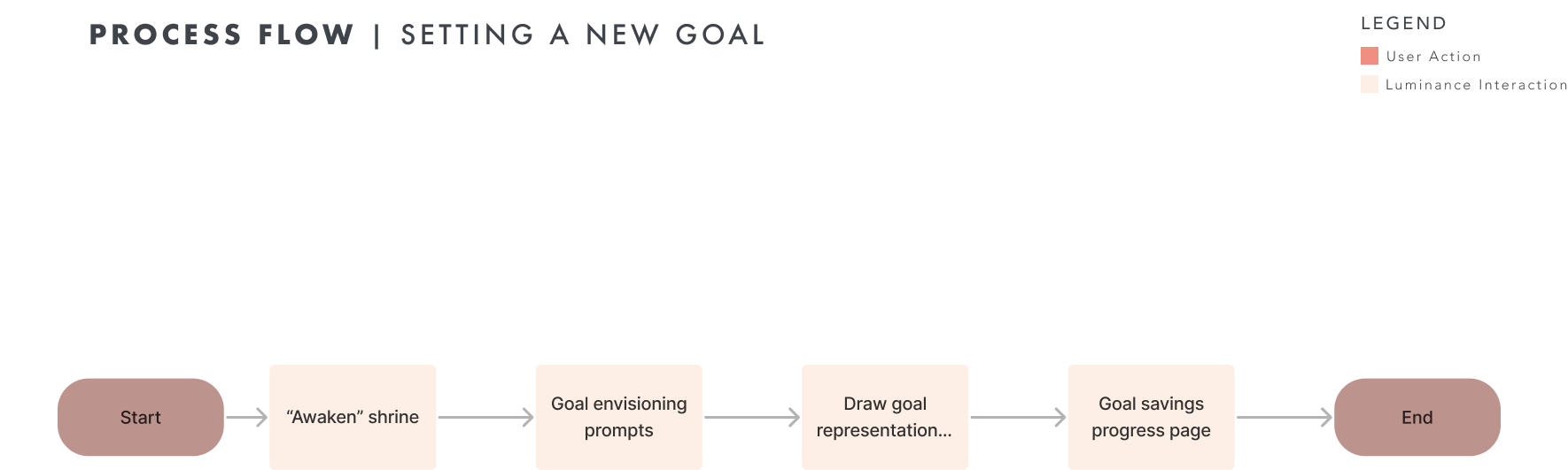
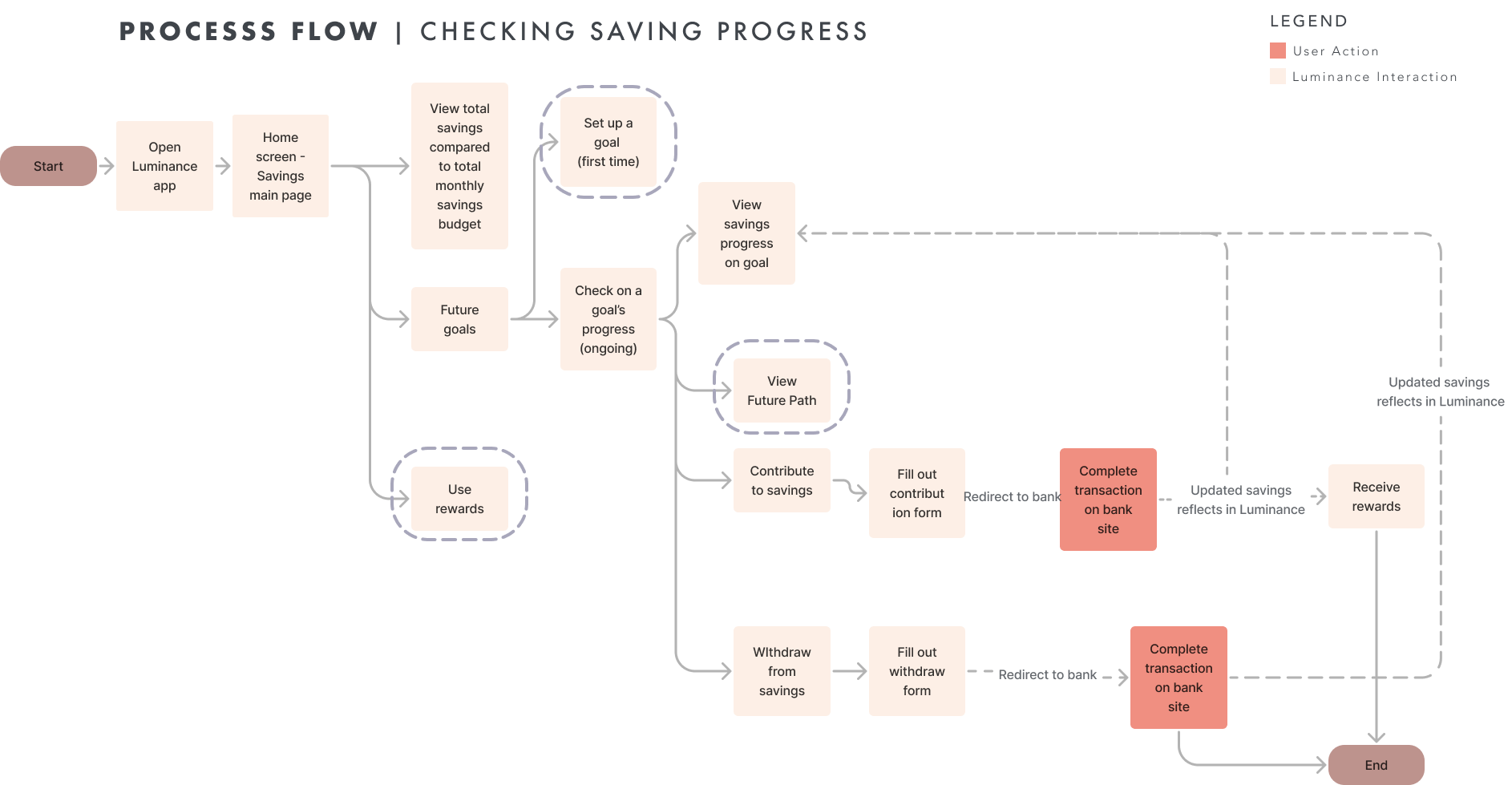
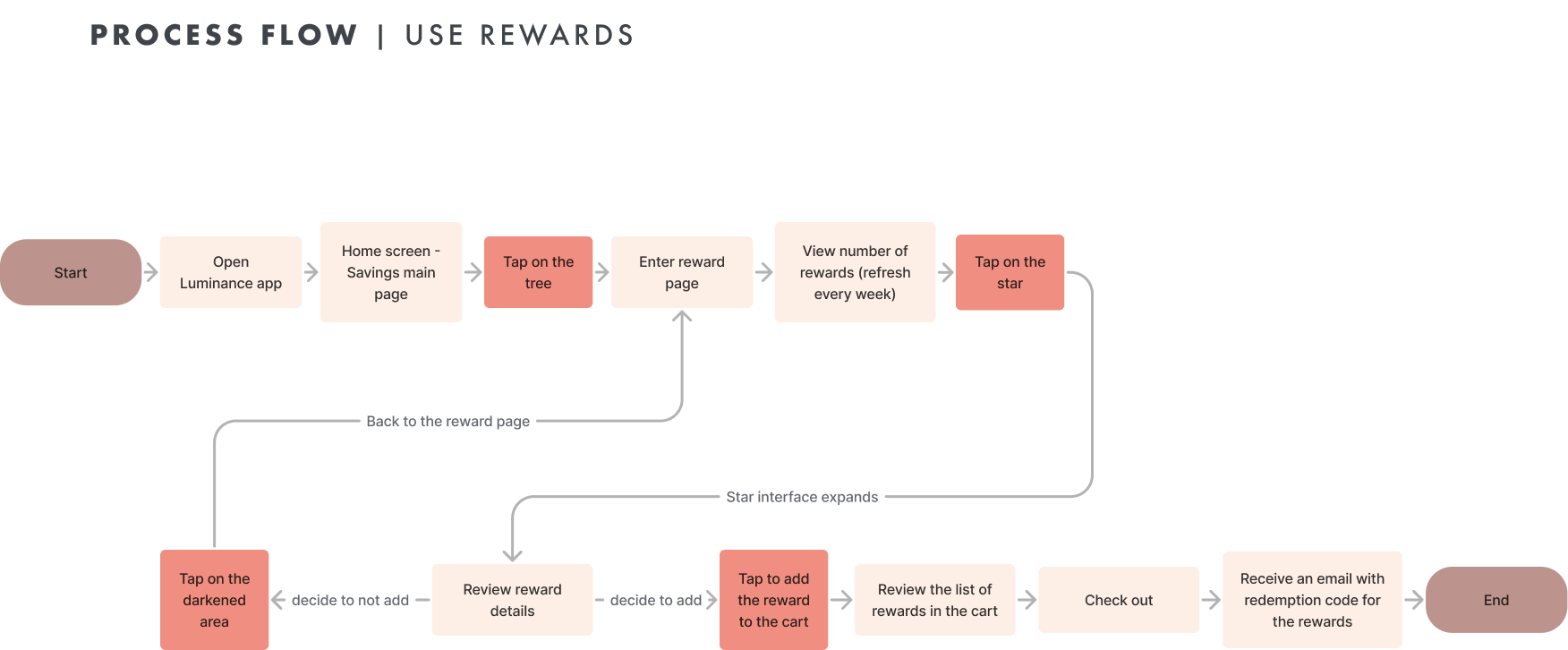
We wanted every interaction in the app to feel intuitive, with user flows that guide people through purchases, goal-setting, and progress tracking without friction.
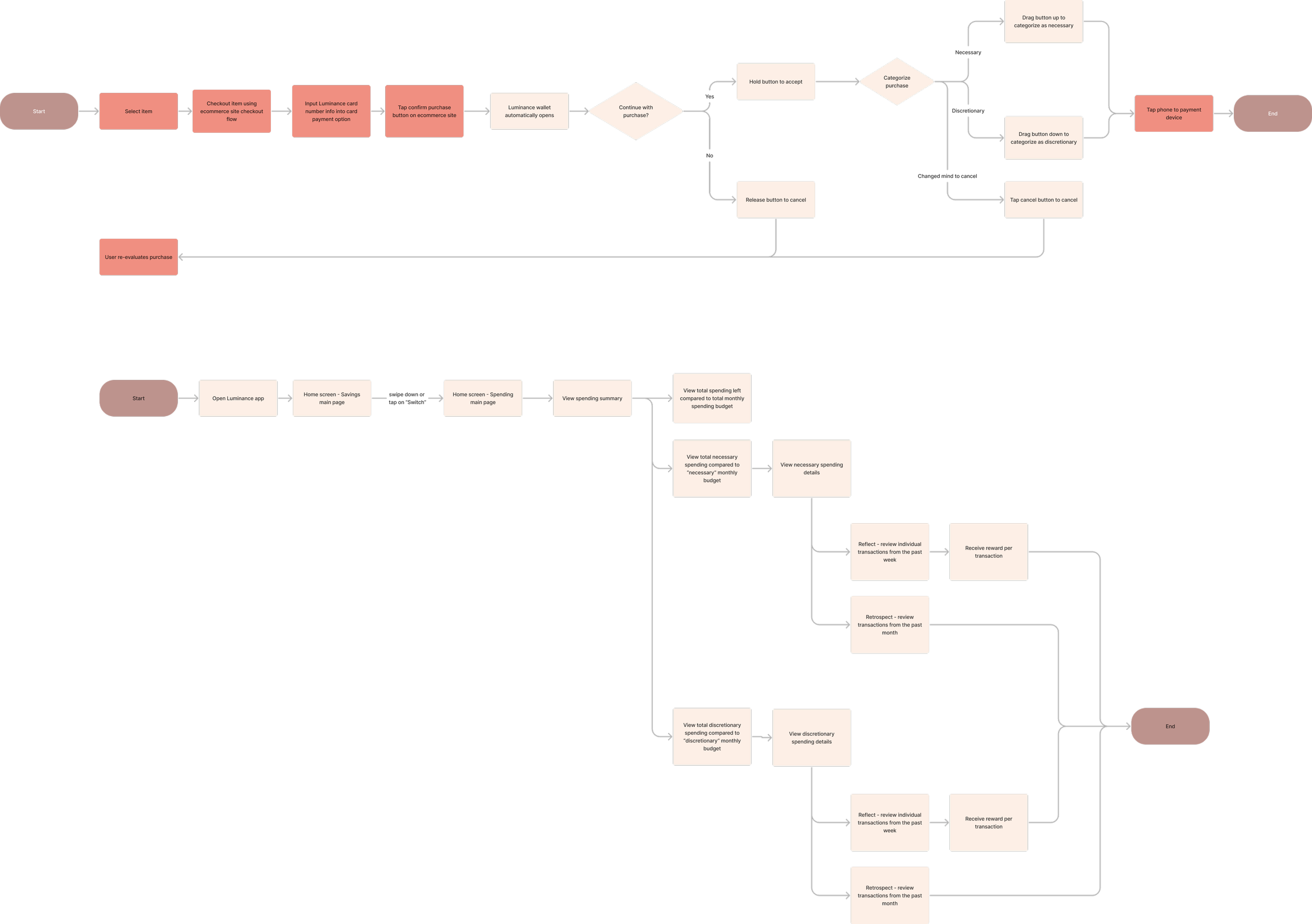
End-to-end user flow
System Architecture
Luminance's system architecture is designed with user privacy and personalization in mind. Users can easily create profiles and link their bank accounts, enabling Luminance to offer tailored saving and spending guidance. Sensitive data is stored securely, and Luminance only accesses the necessary information from users' financial accounts, safeguarding their privacy throughout the experience.
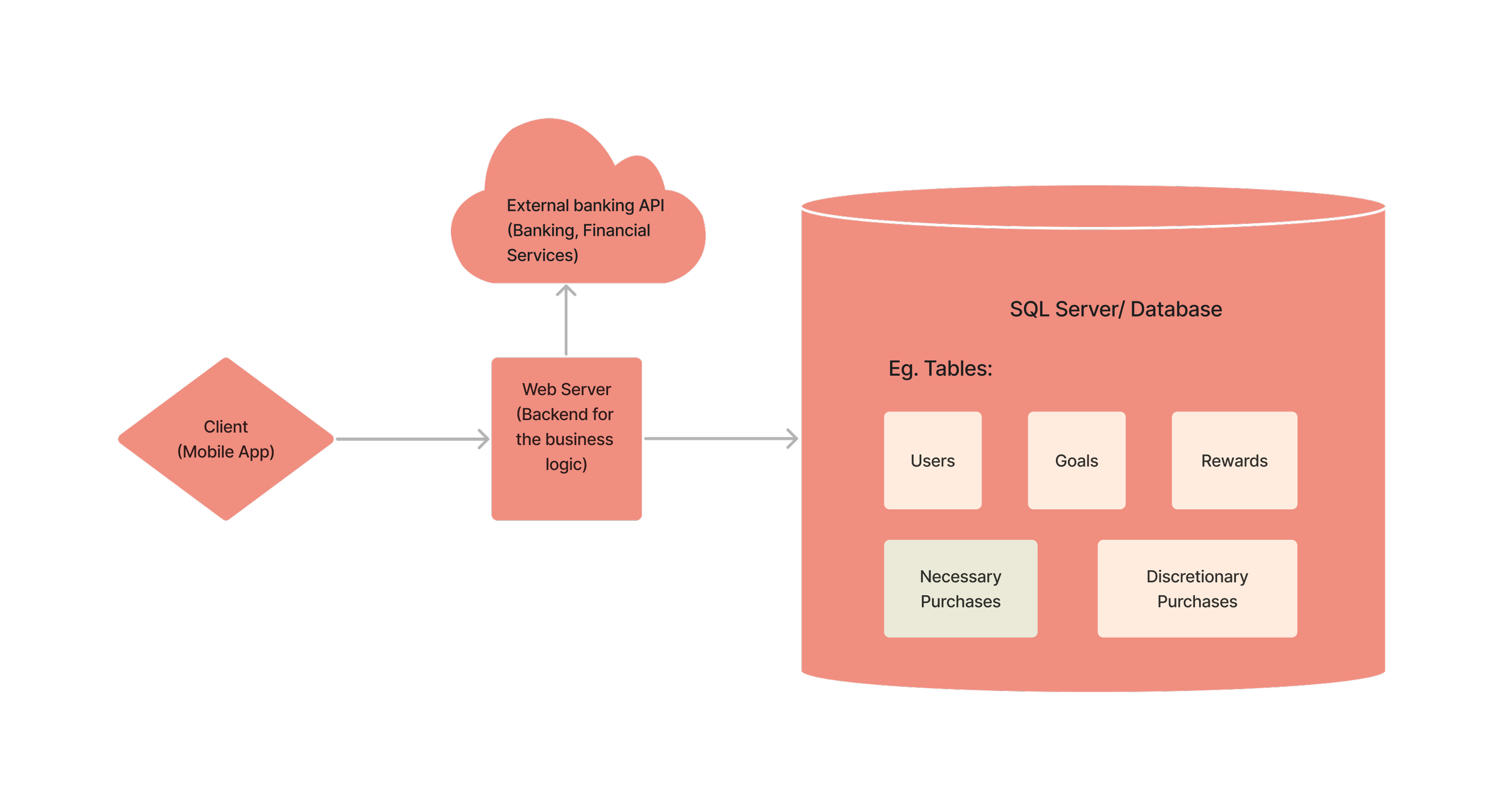
System architecture overview
Low-Fidelity Prototype
While we refined the storyboard, we were also drafting the first version of the prototype, pulling in ideas from our earlier, more heavily gamified concept.
I led the initial concept for the savings page and the "Future Path," working out how to fold in the gamified elements without losing the core financial features we needed to deliver.
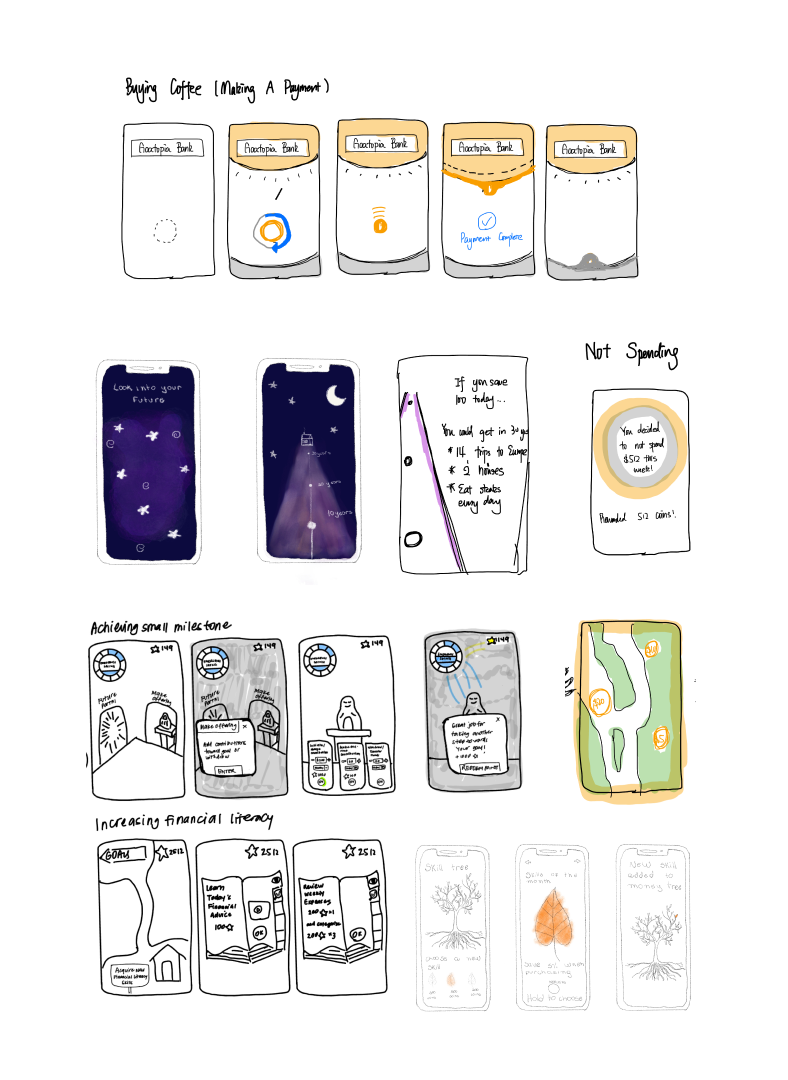
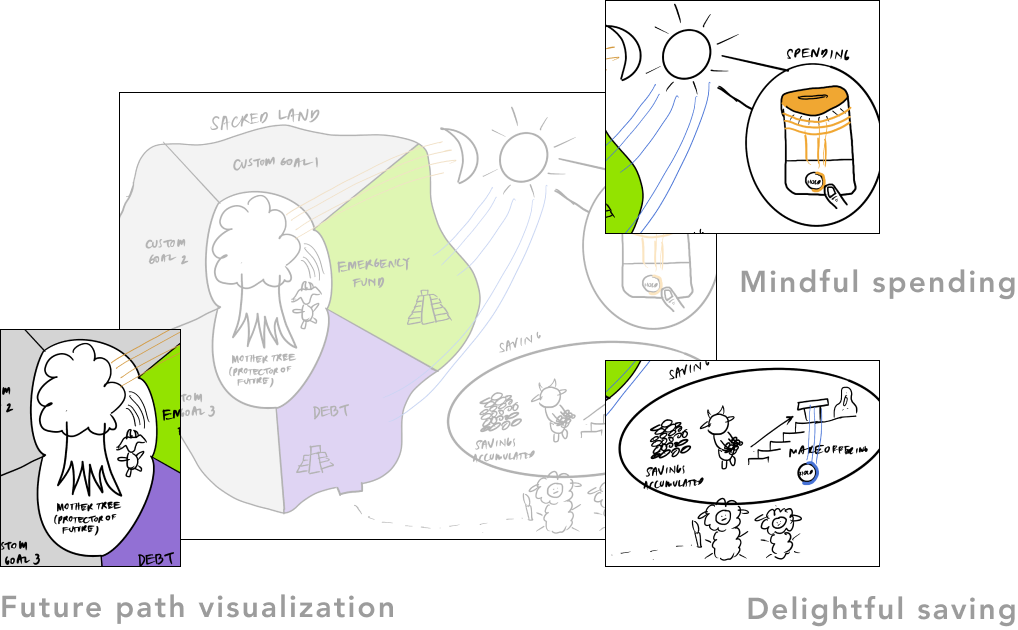
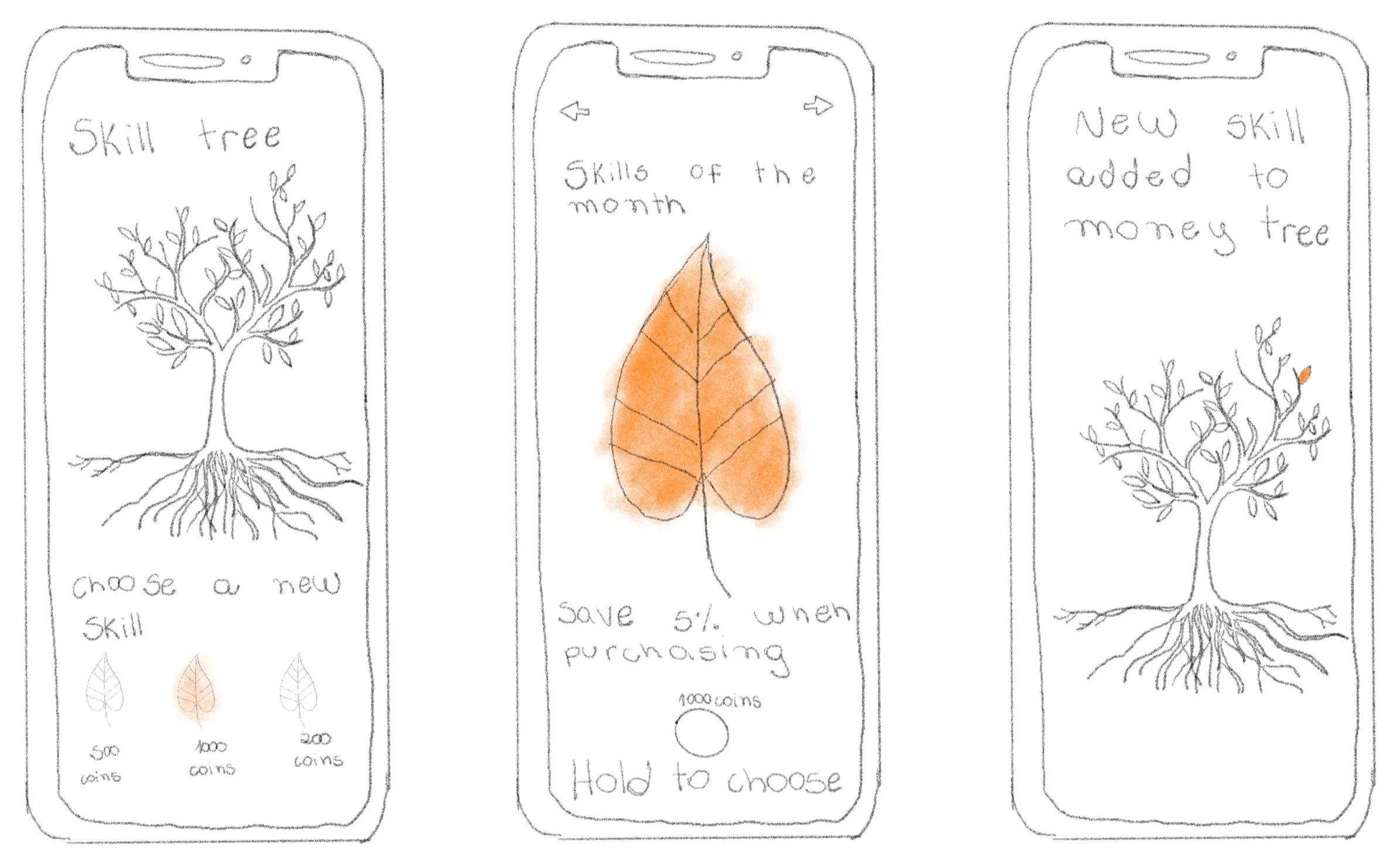
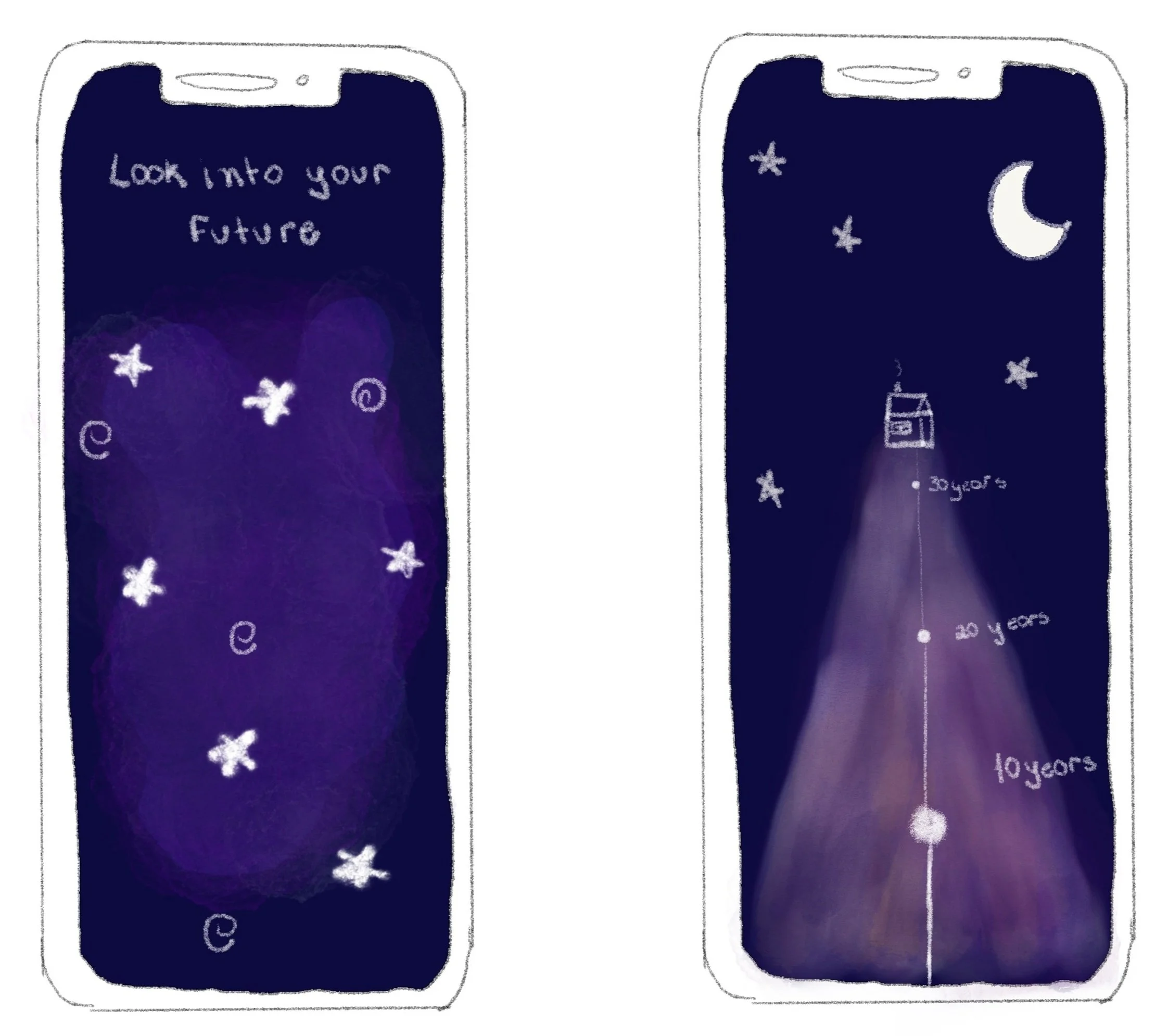
Icon set designed for the "Future Path" savings visualization
High-Fidelity Prototype
The high-fidelity prototype is where all the earlier work came together: a financial planning tool that's actually engaging to use, not just functional.
My focus was the savings page — turning the idea of visualizing and contributing to your future, represented as stars, into something hands-on. I added micro-interactions and animations throughout to make the interface feel alive, while keeping it aligned with what the team wanted users to walk away with: real progress toward their goals.
Aftermath
I'm committed to ongoing project improvement. I want to dig deeper into core interactions for optimization and explore expanding our platform to VR and desktop. Engaging users through testing to validate design assumptions, particularly around spending interactions, is crucial. I also aim to enhance our design system for a consistent user experience.
.gif)
Exploring what a VR expansion of Luminance could look like