ENZZO · PART 3 OF 3 · AUG 2024 TO NOV 2026
Design system
The tokens, scales and components that let engineers and AI tools at Enzzo build from one system.
Role
Product Designer: design system, documentation, front-end implementation
Duration
Aug 2024 to Nov 2026
Team
CEO, CTO, product and four engineers.
At a glance
Problem
Spacing, type weight and states differed from component to component, and the light theme did not match the dark one.
Change
I introduced a 4-point spacing scale, a radius scale and a full type scale, rebuilt the light theme, and wrote down every token change for engineers.
Result
Engineers built from the tokens, and screens stopped differing from page to page. I packaged 69 components and 84 color tokens for Claude Design, and did not measure the time it saved.
My part
Tokens, documentation, the Figma audit and, from April 2026, 50 commits in the product repo, 46 in production and none reverted.
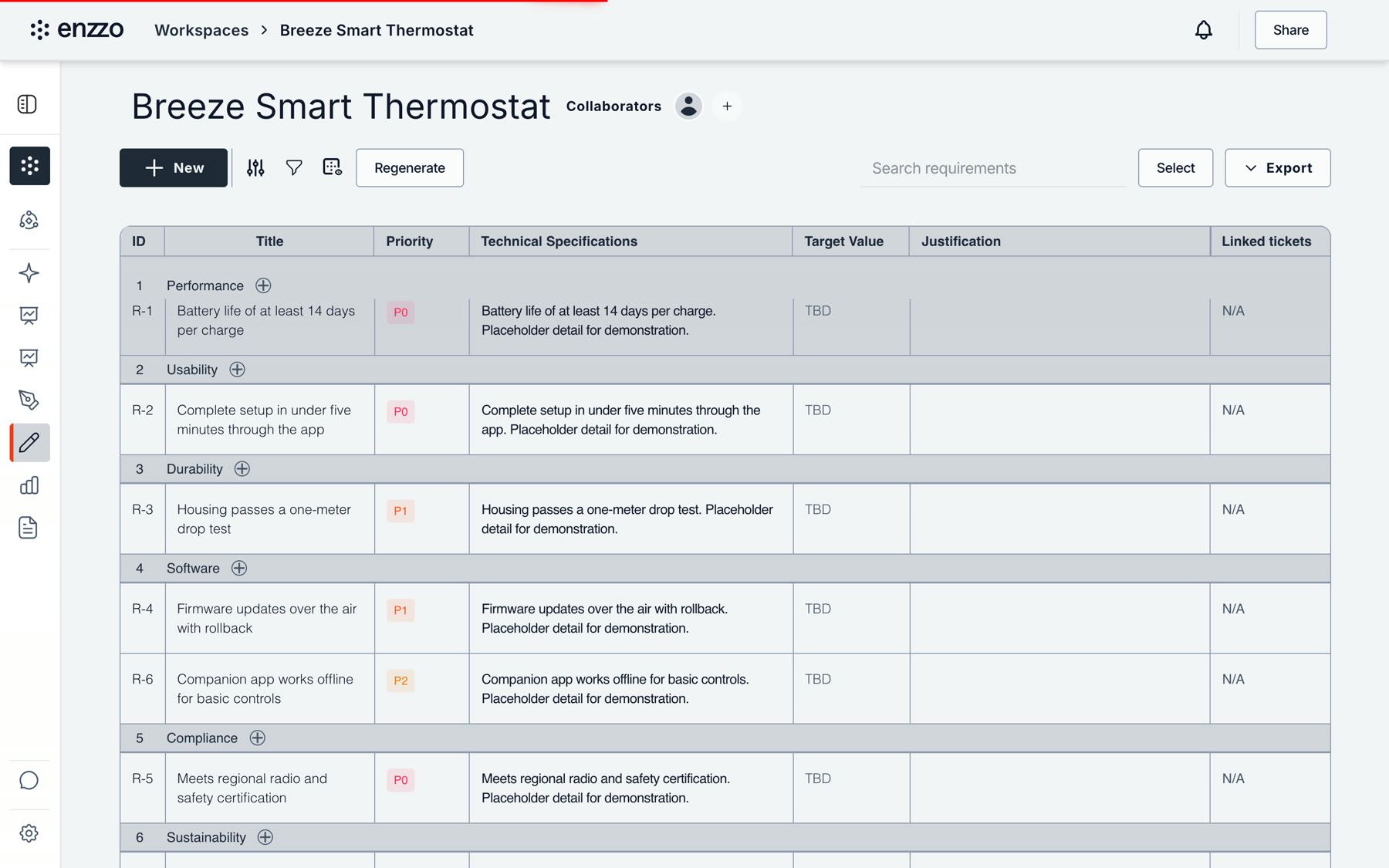
The same tokens and components across tables, buttons and navigation.
Colors, type weights and spacing changed from page to page, and the light theme did not match the dark one. Fixing that meant writing down every token change, so engineers and later AI coding tools could build from it. Part 3 of my Enzzo case study covers the system, the bundle I packaged for Claude Design, and the fixes I started making in code myself.
Every screen and video here comes from a demo workspace with invented products, people and numbers, so none of it is client data.
The design system
Spacing, type weight and states differed from component to component, and the light theme did not match the dark one. I introduced a 4-point spacing scale, a radius scale and a full type scale (display, headline, title, label, body), rebuilt the light theme on a cool slate palette and fixed card stroke contrast. I wrote a developer-first document of every token change (old value, new value, why), audited the Figma file so AI coding tools could read it (generic variant names, inconsistent property keys, hard-coded colors, missing states), and synced tokens and the type scale with the code. Engineers built from the tokens, and screens stopped differing from page to page. When AI coding tools got good enough, I started changing the UI in code myself. The images below show the result: shared components, the foundations sheet, the type scale and the light theme before and after.
Reference sheet from the real light theme: 34 of the semantic color tokens, the 4px spacing scale and the radius scale.
The type scale and shared components, redrawn from the production class definitions with fictional sample content.
The light theme before and after the February 2026 token change, with the contrast it fixed. Rendered from the documented token values, not a screenshot of the old app.
A design system Claude Design can use
In progress
I built every prototype and marketing asset by hand because general AI tools could not read our system and produced off-brand results. I audited Figma against the code (75 of 79 color tokens match) and packaged 69 real components, 84 color tokens, the type scale and written rules into a bundle Claude Design can build with. A marketing associate used it to create images and videos that stayed consistent. I did not measure the time saved, and that is the first number I would have tracked.
The bundle Claude Design reads. The prototype in the last step is an illustrative layout sketch, not a real Claude Design render.
Working in code and client identity
Client identity. Brand design language analyses and reusable prompt packs for several clients, plus a contrast fallback so any client's brand color stays readable.
Working in code. From April 2026 I fixed UI directly in the product repo with AI coding tools: 50 commits touching 336 files, 46 of them in production and none reverted. The CTO and other engineers reviewed them. I write each fix as an instruction a coding tool can execute and then review the result, and each fix lives in one shared place, with tests when behavior changes.
Written down for engineers
I wrote the process down in Confluence, one short page per thing engineers kept asking about: loading states (Apr 2025), tour tips (Jul 2025), font sizes (Jul 2025), document and table editor formatting (Aug 2025), and a developer first page on what changed in the design system (Feb 2026). Feature specs say the Figma file is the source of truth for the visuals, so an engineer knows which one to trust when they disagree.
Engineers and AI tools build from what I wrote down. Each token change went into a document with the old value, the new value and the reason. Once I wrote decisions down, I could go back and see why I made them, and so could everyone else. Fixing a color or a state once, in the shared component, with a test, taught me to design for the shared component. One fix then covers every screen.
Results
50
code commits since Apr 2026, 46 in production
69
components packaged for Claude Design
75 of 79
color tokens match between Figma and code